What Is Bean-to-Bar Chocolate? Meaning, Process and How to Spot It
Walk into a specialist chocolate shop and you will see the phrase on nearly every wrapper: bean-to-bar. It sounds like a quality promise, and sometimes it is, but the term describes a method rather than a guarantee. This guide explains what it actually means, what the maker does at each stage, where it differs from the chocolate most people grew up with, and how to check whether a bar earns the label.
What bean-to-bar means
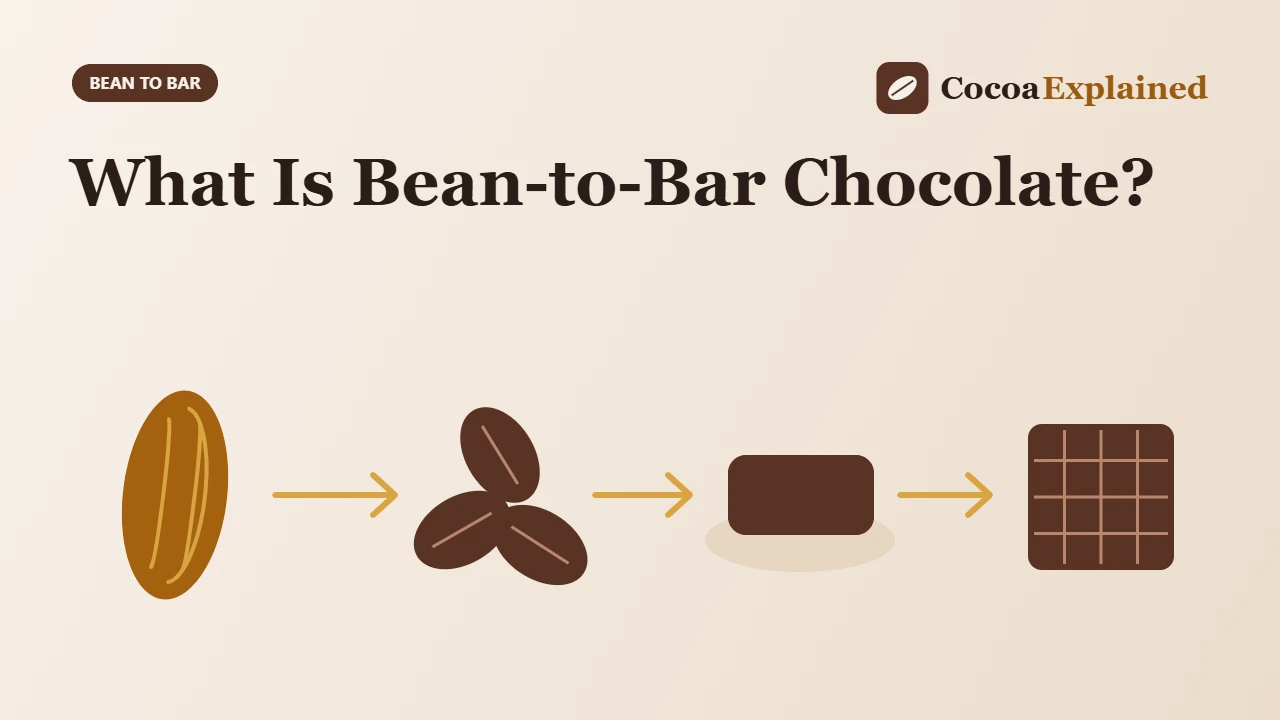
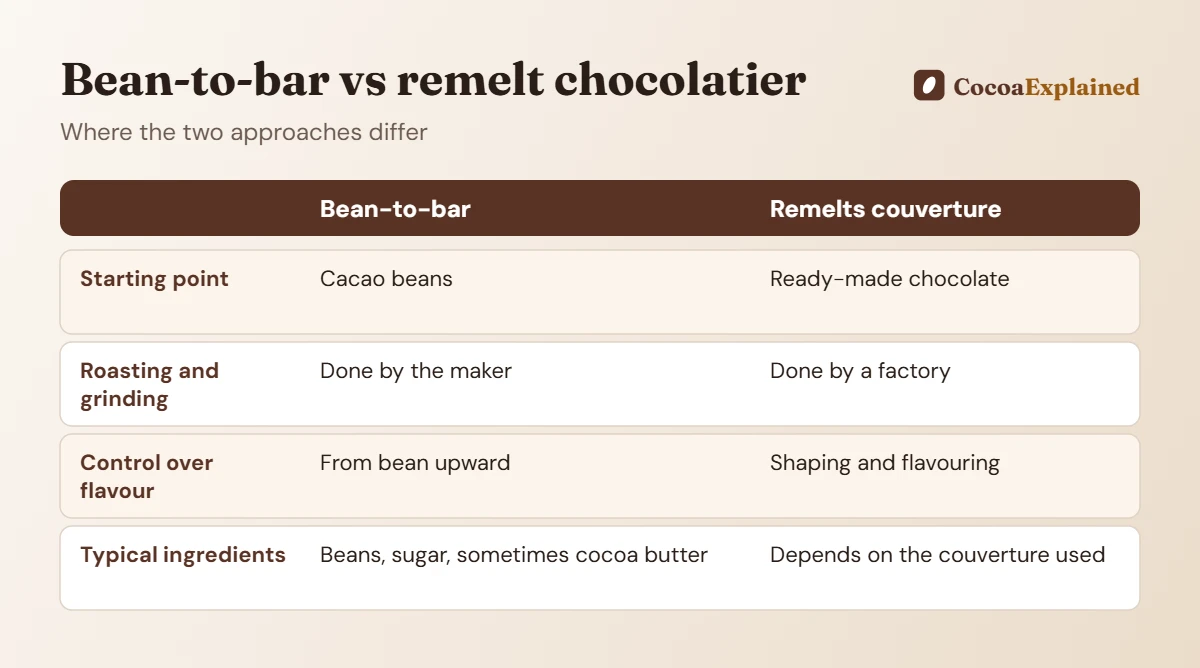
A bean-to-bar maker buys cacao beans (already fermented and dried at the farm or a local fermentery) and turns them into chocolate bars in their own workshop. They do the roasting, the cracking, the grinding, the refining and the conching themselves, then temper the chocolate and mould it into bars. One business controls every step after the beans arrive.
That is different from a chocolatier who buys finished chocolate, often called couverture, melts it and shapes it into truffles, bonbons or bars. Both are legitimate crafts. A good chocolatier can do beautiful work with someone else’s chocolate, much as a baker can make wonderful bread from bought flour. The difference is only in how much of the chocolate-making the person controls. If the word couverture is new to you, our guide to couverture and compound chocolate covers it.
The steps a bean-to-bar maker handles
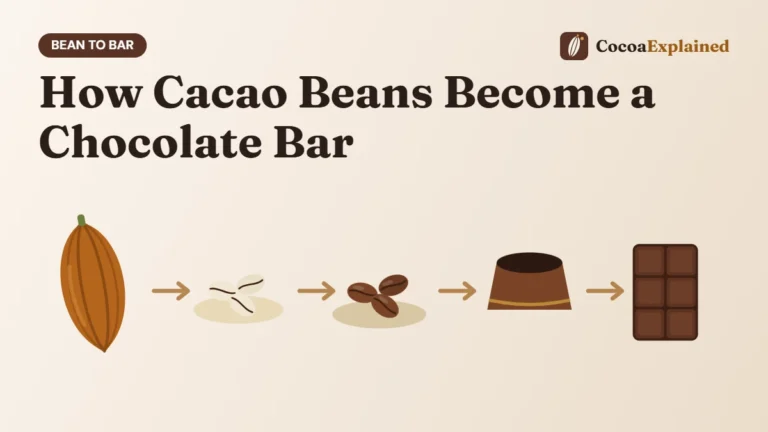
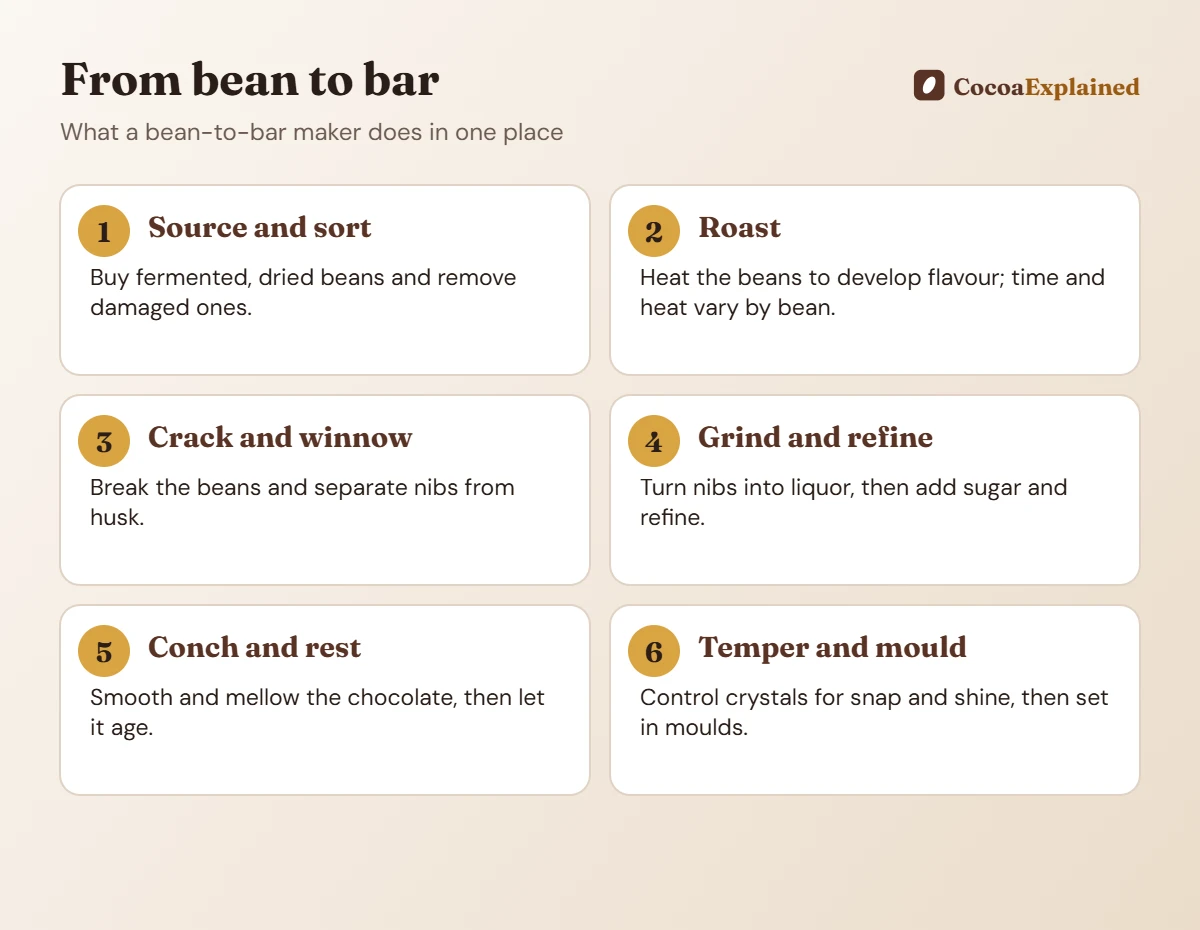
Large factories follow the same basic sequence, so the steps themselves are not unique to small makers. What differs is scale and how much attention each batch gets. Here is the usual order. If you want the farm-side story first, see how cacao beans become chocolate.
- Sourcing and sorting. The maker chooses beans, often from one country or one farm, and removes stones, broken beans and anything that looks off.
- Roasting. Heat develops flavour and drives off sharp, acidic notes. Light roasts keep fruity character; darker roasts push towards nutty and bitter. There is no single correct setting, which is why two makers using the same beans can end up with different bars.
- Cracking and winnowing. The beans are broken into pieces and the papery husk is blown away, leaving the nibs, which are the part used for chocolate.
- Grinding and refining. The nibs are ground until they turn into a thick liquid called cocoa liquor. Sugar is added and the mixture is refined until it is smooth enough that the tongue no longer detects grit.
- Conching. The chocolate is stirred and aerated for hours, sometimes days. This smooths the texture and lets unwanted sour notes evaporate.
- Resting, tempering and moulding. Many makers let the chocolate age for a few weeks. It is then tempered so the cocoa butter sets with a clean snap, and poured into moulds. Tempering at home uses the same principle.
Want to see those steps in motion? Our animated video follows one cacao pod all the way to a finished bar:
How short the ingredient list usually is
Because the maker starts from beans, a bean-to-bar dark bar often lists just two ingredients: cocoa beans and sugar. Some add extra cocoa butter for fluidity, or milk powder for a milk bar. Vanilla and soy lecithin turn up in many commercial bars but are less common in this style.
A short list is a good sign, but it is not proof of anything on its own. Plenty of mass-market dark chocolate has a perfectly reasonable ingredient list too. What the short list does tell you is that the maker is relying on the beans for flavour rather than on additives.
Why people care about it
- Flavour that reflects the bean. Makers who work with one origin can let the character of that bean come through, which is why bean-to-bar bars often taste noticeably different from each other. Single-origin chocolate explains that side of it.
- Traceability. Small makers can usually tell you where the beans came from, and some publish the farm or cooperative.
- Control over roasting and refining. A maker who handles every stage can adjust the recipe batch by batch.
- Interest for tasting. If you enjoy comparing flavours, bars from different makers give you a lot to compare. Our guide to tasting chocolate shows how.
What it does not guarantee
This is where the marketing runs ahead of the facts. Bean-to-bar does not automatically mean the chocolate is better, healthier, more ethical or better value.
- Quality still depends on the beans and the skill of the maker. A badly roasted bean-to-bar bar can taste worse than a well-made supermarket one.
- It says nothing about how the farmers were paid. Some makers pay well above commodity prices and say how much; others say nothing. Ask or look for specifics rather than assuming.
- It is not a health claim. The nutrition of a dark bar depends on its sugar and fat content, not on who made it.
- Consistency can vary. Small batches mean a favourite bar may taste slightly different next year.
- It usually costs more. Smaller scale, better beans and hand work all add to the price.
Terms that sound similar but are not regulated
Craft, artisan, small batch, handmade and bean-to-bar are not defined in law in the way the word chocolate is. A manufacturer can print any of them on a wrapper. Bean-to-bar is the most meaningful of the group because it describes a concrete process, but it is still a description the maker gives themselves. The same goes for single-origin claims and percentage claims, so it is worth reading what a cocoa percentage actually means before you rely on one.
How to spot a genuine bean-to-bar bar
- Read the back of the wrapper. Look for the maker explaining where the beans come from and that they make the chocolate themselves. Vague poetry about passion and craft is a weaker sign than a named country, region or farm.
- Check the ingredient list. Beans, sugar and perhaps cocoa butter is typical. A long list with several fats suggests a different kind of product.
- Look at the maker’s website. Genuine makers tend to show their workshop, equipment and process and are happy to answer questions.
- Ask where the roasting happens. If a brand cannot say, or the answer is that someone else makes the chocolate for them, it is not bean-to-bar in the usual sense.
- Taste it. Bean-to-bar bars often have clear fruity, nutty or floral notes and a slightly less uniform character than industrial chocolate. That is a clue, not a test.
Is bean-to-bar worth paying for
If you enjoy chocolate for its flavour, trying a few bars is a rewarding way to learn what you like, and most people find at least one bar that changes what they expect from chocolate. If you mainly bake or want an everyday snack, a well-made conventional bar is perfectly fine and often better value. For baking, the more useful questions are about fat content and type, which our baking chocolate guide covers.
A sensible way to start is to buy one or two bars from different makers with a similar cocoa percentage and taste them side by side. You will learn more from that comparison than from any amount of reading, including this guide.
Frequently asked questions
What does bean-to-bar mean in simple terms
It means the maker starts with cacao beans and does the roasting, grinding, refining and moulding themselves, rather than melting down chocolate someone else made.
Is bean-to-bar chocolate better than normal chocolate
Not automatically. It gives the maker more control and often more interesting flavour, but quality depends on the beans and the skill involved. A good conventional bar can beat a poor bean-to-bar one.
Is bean-to-bar chocolate healthier
No. Nutrition depends on the sugar, fat and cocoa content of the bar, not on how it was made. Read the label as you would for any chocolate.
Is bean-to-bar the same as fair trade or ethical
No. It describes the process after the beans arrive. Whether farmers were paid fairly is a separate question that the maker should be able to answer in specific terms.
Why is bean-to-bar chocolate more expensive
Smaller batches, higher-priced beans and more hand work all raise costs. Makers also buy far less than large manufacturers, so they get no volume discounts.
What is the difference between bean-to-bar and craft chocolate
Craft chocolate is a looser term and is not defined in law. Bean-to-bar describes a specific process, although it is still a claim the maker makes about themselves.
Key points
- Bean-to-bar means one maker handles every step from beans to finished bar.
- It differs from remelting ready-made couverture, which is a different craft rather than a worse one.
- Short ingredient lists are typical but are not proof of quality.
- The label does not guarantee better flavour, ethics or health benefits.
- Look for named origins, a clear maker story and a short ingredient list.
Related guides
- How cacao beans become chocolate
- What is single-origin chocolate
- How to taste chocolate
- Couverture vs compound chocolate
- Start here: a beginner’s guide to chocolate
- Browse all chocolate guides
Sources
- International Cocoa Organization: cocoa and chocolate
- U.S. eCFR Title 21 Part 163: cacao products
- EUR-Lex Directive 2000/36/EC on cocoa and chocolate products
Last updated: October 2026. This guide is educational and is not medical or nutrition advice. See our editorial policy.