Is White Chocolate Real Chocolate? What the Rules Say
Ask a group of chocolate lovers whether white chocolate is “real” chocolate and you will start an argument. Purists say it has no chocolate flavour and no cocoa, so it does not count. Others point out that it is made from the cocoa bean and is sold as chocolate all over the world.
Both sides have a point, and the honest answer depends on what you mean by “real”. This guide looks at what is actually in white chocolate, what the rules say it must contain, how it differs from dark and milk chocolate, and how to pick a good bar rather than a sugary imitation. If you want the full comparison of all three types, our guide to dark, milk and white chocolate covers it side by side.
What white chocolate is made of
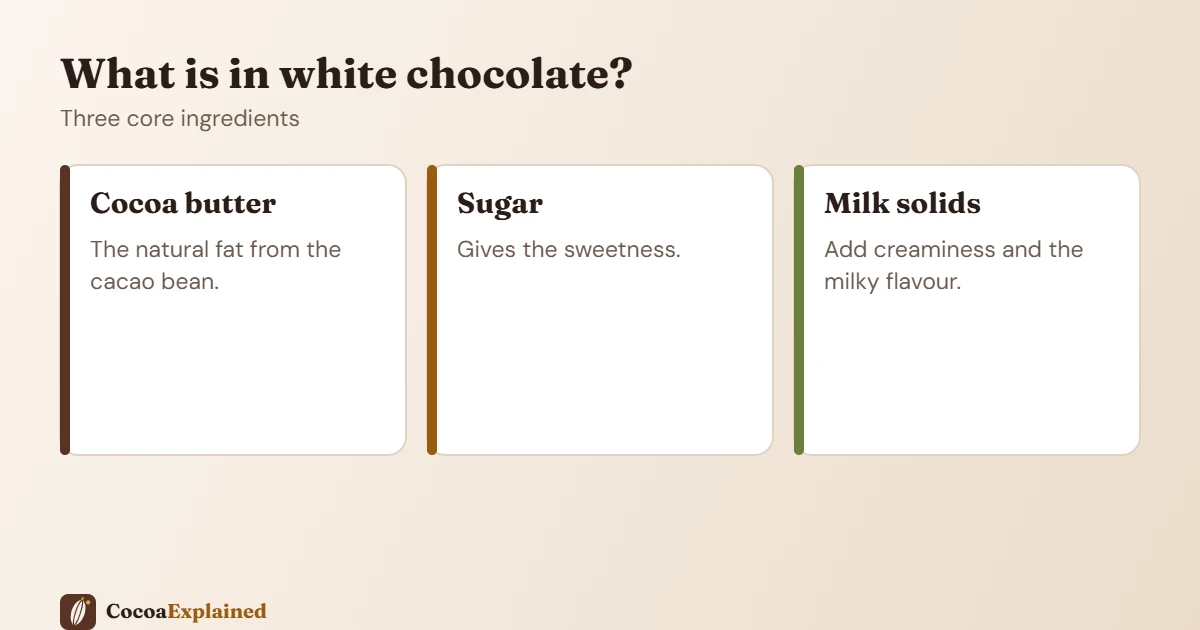
White chocolate is built from three main ingredients:
- Cocoa butter, the natural fat pressed from the cocoa bean.
- Sugar.
- Milk solids, usually in the form of milk powder.
Most recipes also add a little vanilla for flavour and an emulsifier such as soy lecithin to keep the mixture smooth.
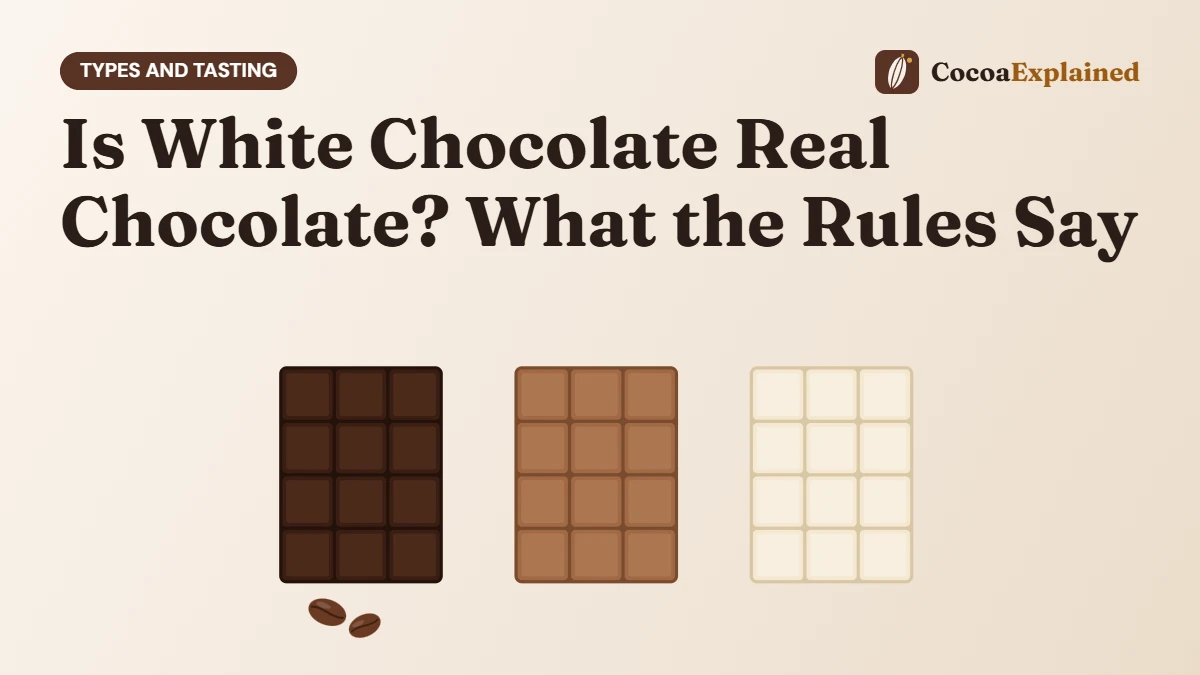
What is missing are the non-fat cocoa solids, the dark brown particles that give dark and milk chocolate their colour, their bitterness and their typical “chocolatey” taste. That is why white chocolate is ivory or pale cream instead of brown, and why it tastes sweet and milky rather than bitter.
Why people say it is not real chocolate
Chocolate in the everyday sense gets its flavour from cocoa solids. White chocolate has none, so for some people it lacks the defining feature of the category. It also contains no theobromine or caffeine to speak of, because those compounds live in the solids rather than the butter. If you are curious about that, see does dark chocolate have caffeine?.
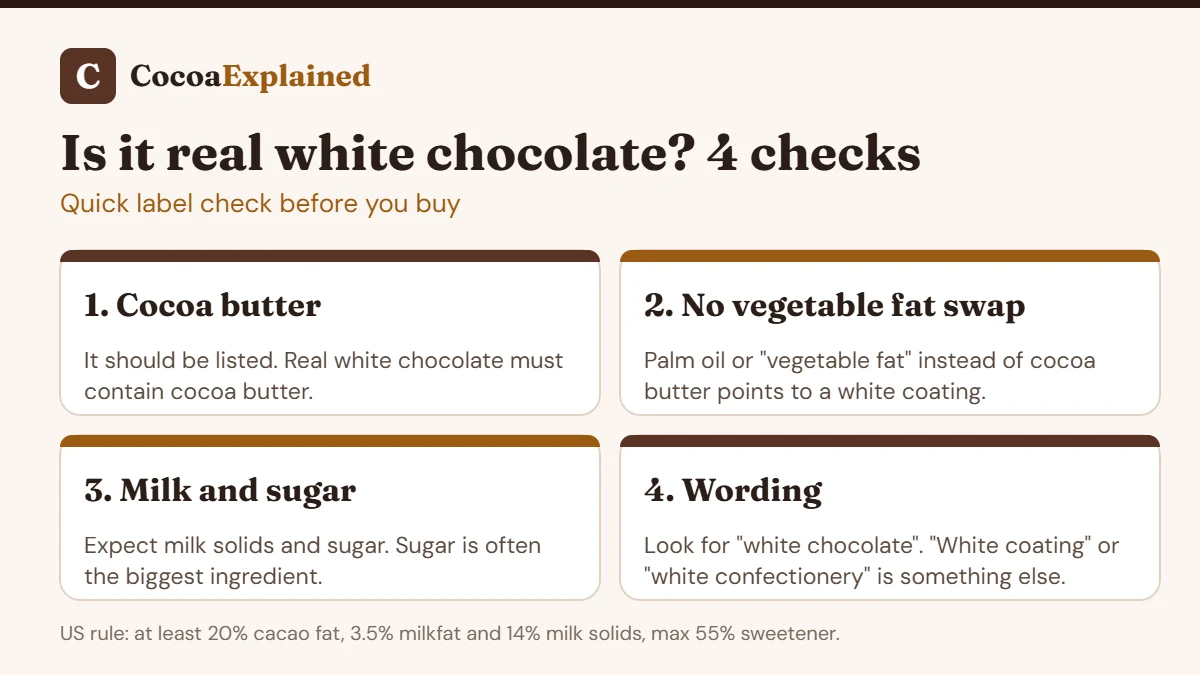
There is also a practical reason for the suspicion. Cheap “white” products sometimes replace cocoa butter with other vegetable fats and are sold as white coating or “white chips”. Those really are not chocolate, and they taste noticeably different from the real thing.
Why people say it is real chocolate
Cocoa butter comes from the cocoa bean. The beans are fermented, roasted and ground, and the fat is pressed out as a pure ingredient. White chocolate is made from that fat, with sugar and milk, using the same conching and tempering methods as other chocolate. It is manufactured in the same factories and sold in the same aisles.
The law largely backs this view. In many places, white chocolate has its own legal definition, with minimum amounts of cocoa butter and milk solids. In the United States, for example, federal rules for white chocolate require at least 20 per cent cocoa butter, at least 14 per cent total milk solids, at least 3.5 per cent milkfat, and no more than 55 per cent sweeteners. European rules set similar minimums for cocoa butter and milk solids. So in legal terms it is a recognised chocolate product, just a different one.
| Dark chocolate | Milk chocolate | White chocolate | |
|---|---|---|---|
| Cocoa butter | Yes | Yes | Yes |
| Non-fat cocoa solids | Yes, a lot | Yes, less | No |
| Milk solids | Little or none | Yes | Yes |
| Colour | Dark brown | Medium brown | Ivory or cream |
| Flavour | Bitter, intense | Sweet, creamy, cocoa | Sweet, milky, vanilla |
| Caffeine and theobromine | Yes | Small amounts | Almost none |
A short history
White chocolate is a relatively modern invention. It is usually credited to Nestlé, which sold a white bar in the 1930s, partly as a way of using up cocoa butter left over after producing cocoa powder. It took decades to become widely popular, and it has had a reputation as the sweet, less serious cousin of dark chocolate ever since. In reality, good white chocolate can be excellent when it is made carefully.
What good white chocolate tastes like
High-quality white chocolate should taste creamy, a little like caramelised milk with a hint of vanilla, and the cocoa butter should give a faint, rounded, slightly nutty flavour. It melts cleanly and smoothly on the tongue with no waxy aftertaste.
Poor-quality white chocolate tastes only of sugar. It can be cloying, grainy or greasy, and leaves a film in the mouth. That is often a sign of low cocoa butter content, added vegetable fat or too much sugar.
How to choose a good bar
- Check the first ingredients. Sugar is often first, but cocoa butter should be close behind. If cocoa butter is missing and the list mentions palm oil or vegetable fat, it is a coating, not chocolate.
- Look at the cocoa butter percentage if the pack gives it. Many good bars are in the range of about 30 per cent or more.
- Look for natural vanilla rather than “vanillin” or artificial flavour, if flavour matters to you.
- Check the colour. Real white chocolate is cream or ivory, not bright white. A very white colour can mean colouring or added fats.
- Mind the milk content. White chocolate contains milk, so it is not suitable for anyone avoiding dairy.
Our guide to couverture vs compound chocolate explains the cocoa butter difference in more detail.
How to use white chocolate
- In baking. Blondies, cookies, cakes and frostings take well to it. It is sweet, so you can reduce the sugar slightly.
- For ganache. White chocolate ganache needs a higher ratio of chocolate to cream, because it is softer. A common rule is two or three parts chocolate to one part cream by weight.
- For coating. It can be tempered like other chocolates, at lower temperatures. See how to temper chocolate at home.
- Pairing. It goes well with tart fruit such as raspberries, lemon and passion fruit, as well as matcha, nuts and spices.
White chocolate burns easily. Melt it gently and keep the heat low.

Is white chocolate healthy?
White chocolate is high in sugar and fat and lacks the cocoa solids that give dark chocolate its plant compounds, so it is best seen as a sweet treat. It is not a health food, and people watching their sugar or saturated fat intake should enjoy it in moderation. This is general information, not medical advice.
White chocolate by the numbers
In the United States, the rules are specific. A product can only be called white chocolate if it meets the minimums in the table below. Other countries set their own rules, so treat this as one clear example.
| Requirement (US, 21 CFR 163.124) | Limit |
|---|---|
| Cacao fat (cocoa butter) | At least 20% by weight |
| Milkfat | At least 3.5% |
| Total milk solids | At least 14% |
| Sweeteners | No more than 55% |
| Whey or whey products | No more than 5% |
| Emulsifiers | No more than 1.5% |
| Colouring | None allowed |
This is why white chocolate has no cocoa solids but still counts as chocolate: the cocoa butter is the key ingredient. Without it, a product must be sold under another name, such as a white coating.
Real white chocolate vs white coating
| Real white chocolate | White coating or compound | |
|---|---|---|
| Fat | Cocoa butter | Mostly other vegetable fats |
| Taste | Creamy and milky with a gentle cocoa butter flavour | Sweeter and plainer, sometimes waxy |
| Melting | Needs gentle heat and care | Melts and sets easily without tempering |
| Label wording | White chocolate | White coating, white confectionery or similar |
For baking and melting, see how to melt chocolate because white chocolate scorches more easily than dark. Our page on couverture vs compound chocolate explains the coating difference in more detail.
The short version
White chocolate is made from cocoa butter, sugar and milk, with no cocoa solids. It is a legally recognised chocolate product in many countries, but it lacks the flavour and caffeine of dark and milk chocolate. Whether you call it “real” depends on your definition. What matters more in practice is the quality: look for real cocoa butter, a short ingredient list and a creamy, clean taste. If you are curious about how chocolate flavour works across different bars, read how to taste chocolate.
Frequently asked questions
Does white chocolate contain cocoa?
It contains cocoa butter, which comes from the cacao bean, but no cocoa solids such as cocoa mass or cocoa powder.
Does white chocolate have caffeine?
Very little or none, because caffeine and theobromine come mainly from cocoa solids, which white chocolate does not contain.
Why is white chocolate not brown?
The brown colour comes from cocoa solids. White chocolate leaves them out and uses only cocoa butter, sugar and milk solids.
Is white chocolate healthier than dark chocolate?
No. It is high in sugar and fat and has none of the cocoa solids. Neither type is a health food, so enjoy it as a treat.
Are white chocolate chips the same as white chocolate?
Not always. Some contain vegetable fat instead of cocoa butter and are labelled as coating. Check that the ingredient list includes cocoa butter.
Why does white chocolate burn so easily?
Its milk solids and sugar scorch at lower heat than dark chocolate, so melt it gently and stir often.
Key points to remember
- White chocolate is made from cocoa butter, sugar and milk solids.
- It has no cocoa mass or cocoa powder, so it is pale and mild.
- Many countries define it as chocolate with minimum cocoa butter and milk solids.
- Check the label for cocoa butter, not vegetable fat.
- Contains milk, and little or no caffeine.
Related guides
- Dark, Milk and White Chocolate: The Real Differences
- What Is Chocolate, Exactly?
- Couverture vs Compound Chocolate: Key Differences
- What Does Cocoa Percentage Mean on Chocolate?
- What Is Ruby Chocolate? The Pink Chocolate Explained
- Does Chocolate Expire? How Long It Really Lasts
- Start here: a beginner’s guide to chocolate
- Browse all chocolate guides
Sources
- U.S. eCFR: Title 21, Part 163, Cacao product standards
- EUR-Lex: Directive 2000/36/EC on cocoa and chocolate products
- Wikipedia: White chocolate
- 21 CFR 163.124, White chocolate, US Code of Federal Regulations, Cornell Legal Information Institute.
Last updated: October 2026. This guide is educational and is not medical or nutrition advice. See our editorial policy for how we research and write.