How to Taste Chocolate Like a Pro: A 5-Step Guide
Most of us eat chocolate the way we eat crisps: quickly and without much thought. A square goes in, it is sweet, it is gone. There is nothing wrong with that, but it means a lot of what a good bar has to offer never reaches us.
Tasting chocolate properly is not a posh ritual. It is a small set of habits that slow you down enough to notice what is already in the bar: the fruit, the roast, the bitterness, the way it melts. This guide gives you a simple method you can use at home with nothing more than a bar of chocolate and ten quiet minutes, plus a vocabulary for what you are tasting and how to keep notes. If you are choosing what to taste, our guide on what the cocoa percentage means helps you read labels first.
Before you start: set things up
- Room temperature. Chocolate tastes best at around 20°C (68°F). Cold chocolate is muted and hard, and warm chocolate goes soft and greasy. If a bar has been in the fridge, let it come to room temperature in its wrapper.
- A clean palate. Do not taste straight after coffee, mint, spicy food or a strong drink. Take a sip of still water and, if you like, a plain cracker before you begin.
- No distractions. A quiet room with good light helps. Strong smells such as perfume or cooking will interfere.
- Small pieces. A square or two per bar is plenty. You are tasting, not eating a whole bar.
If you want to compare, taste two to four bars in one sitting, and go from lightest to darkest or mildest to most intense, so a strong bar does not drown out a delicate one. Drink water between bars.
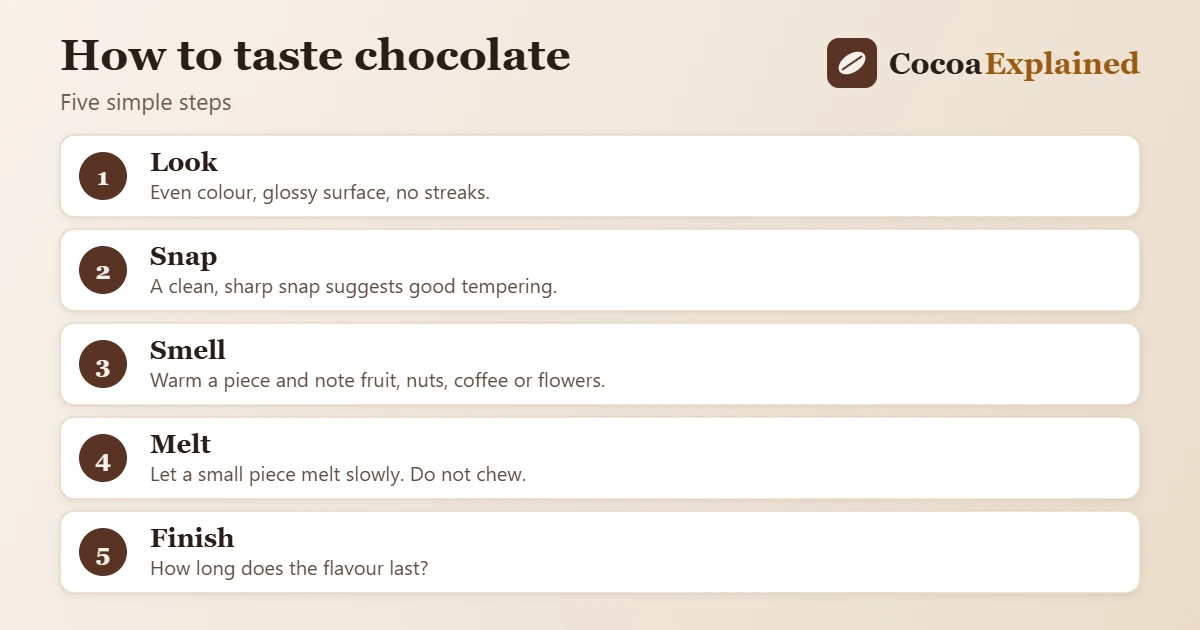
The five steps of tasting chocolate
1. Look
Look at the surface of the chocolate under good light. Well-made chocolate is usually even in colour, smooth and glossy, without grey streaks or white blotches. A dull, patchy surface often signals poor storage or bloom, which we explain in why chocolate turns white. Colour alone does not tell you the quality, but gloss and evenness are good signs.
2. Snap
Break a piece in half near your ear. Properly tempered chocolate breaks with a clean, crisp snap. A soft bend, crumble or dull thud can mean it is poorly tempered, too warm, or higher in sugar or fillings. (Tempering is covered in how to temper chocolate at home.)
3. Smell
Hold a broken piece to your nose and take a few short sniffs. Aromas are a large part of flavour. Notice whether it smells fruity, nutty, roasted, floral, earthy, like coffee, caramel or tobacco. You can also rub the chocolate gently between your fingers to warm it and release more scent.
4. Melt
Place a piece on your tongue and let it sit. Do not chew yet. Let it melt slowly against the roof of your mouth. Notice how quickly it melts and how it feels: smooth, creamy, waxy, grainy, thick or thin. A smooth, even melt is a sign of good conching and good fat, as explained in how cacao beans become a chocolate bar.
5. Taste and finish
As it melts, flavours develop in stages. Pay attention to the first impression, the middle and the aftertaste. Does it start sharp and fruity then turn to roasted nuts? Does it finish clean or bitter? How long does the flavour last after you swallow? Many bars you remember best are the ones with a long, pleasant finish.
What you are actually tasting
Chocolate flavour comes from a few basic sensations plus aroma:
- Sweetness comes from sugar and milk.
- Bitterness is natural in cocoa and in dark chocolate. It should be pleasant and balanced, not harsh.
- Acidity or sourness gives brightness, often described as fruity. Good acidity is lively; too much can taste sharp.
- Astringency is the dry, puckering feeling on the tongue and cheeks, a bit like strong tea. It is a texture sensation, not a taste, and in small amounts it is normal in dark chocolate.
- Aroma is where most of the interesting flavours live: fruit, flowers, nuts, spice, coffee, caramel.
A useful trick: pinch your nose while a piece melts, then release. You will notice a rush of flavour as aromas reach the back of your nose. That is how much of taste actually works.
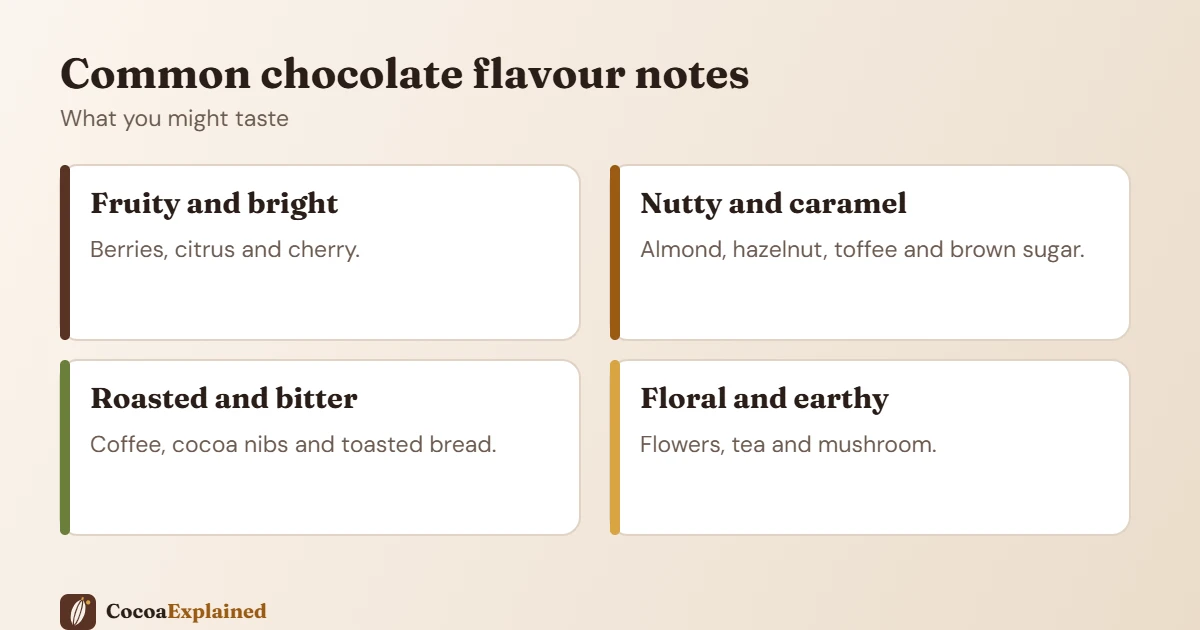
| Flavour family | Words you might use | Often found in |
|---|---|---|
| Fruity | Citrus, red berry, cherry, dried fruit, raisin | Lightly roasted, high-acidity beans |
| Nutty | Almond, hazelnut, walnut, peanut | Many bars, especially medium roasts |
| Roasted | Coffee, toast, caramel, burnt sugar | Darker roasts |
| Floral | Jasmine, orange blossom, honey | Delicate, fine-flavour beans |
| Earthy | Mushroom, tobacco, leather, wood | Some African and darker bars |
| Spicy | Pepper, cinnamon, clove | Certain origins and fermentations |
Flavours that suggest a flaw
Not every taste is good. Some flavours can point to problems in the beans or the process.
- Smoky or burnt: beans dried over a fire, or over-roasted.
- Mouldy, musty or earthy in a stale way: poor drying or storage.
- Sour like vinegar: poor fermentation.
- Waxy or greasy: low-quality fat or poor storage.
- Cardboard or stale: old or poorly stored chocolate.
Occasionally a bar has a quirky or unusual flavour that some people love and others dislike. Taste is personal, so do not worry if you do not match what is written on the wrapper.
Make it into a tasting session
If you want to turn this into a small tasting at home, here is a simple plan.
- Choose three or four bars that differ in one way, for example three different origins at similar cocoa percentages, or three different percentages from the same maker.
- Break each into small pieces and label them.
- Taste in order from mildest to most intense, with water and a plain cracker in between.
- Take brief notes on each: aroma, first taste, main flavour, texture, finish and a score if you like.
- Compare notes and decide what you liked, and why.
Tasting bars side by side is the fastest way to learn what you actually enjoy. You may discover that you like fruity, tangy dark chocolate more than the very bitter type, or that a milder 60 per cent bar suits you better than an 85 per cent one. For bars that are labelled by place, read what single-origin chocolate is to understand why origin can change the flavour.
A simple tasting notes template
| Bar | Appearance and snap | Aroma | Main flavours | Texture | Finish | My score |
|---|---|---|---|---|---|---|
| Example | Glossy, clean snap | Cherry, roasted nuts | Red fruit then cocoa | Smooth | Medium, slightly bitter | 7/10 |
Keep your notes in a notebook or phone. Over time you will see patterns in what you like, and you will start to recognise flavours more quickly.
The short version
To taste chocolate, start at room temperature with a clean palate. Look at it, snap it, smell it, let it melt without chewing, and then notice how the flavour changes and finishes. Learn a handful of descriptive words, compare a few bars side by side, and jot down notes. You do not need special equipment or training, only a little patience, and a good bar is a lot more interesting than it first seems.
Frequently asked questions
How much chocolate do I need for a tasting?
One small square per bar is plenty. A tasting is about paying attention, not eating a lot.
Why should I not chew chocolate when tasting?
Letting it melt slowly releases the flavours gradually and lets you notice texture and how the taste changes. Chewing makes it end too quickly.
What does astringency mean?
It is a dry, puckering feeling in the mouth, similar to strong tea. It is common in very dark chocolate and is a texture, not a taste.
Should chocolate be cold when tasting?
No. Cold dulls flavour and aroma. Taste it at room temperature.
Are tasting notes real or made up?
They are real. Aromas and flavours come from the bean, how it was fermented and roasted, and how the chocolate was made. Different people describe them differently, so use your own words.
What should I drink while tasting chocolate?
Plain water. Avoid strongly flavoured drinks, which can mask the chocolate.
Key points to remember
- Taste chocolate at room temperature, in small pieces.
- Use five steps: look, snap, smell, melt and finish.
- Notice flavour families such as fruity, nutty, roasted and floral.
- Taste from milder to stronger and cleanse your palate between bars.
- Take simple notes to learn what you like.
Related guides
- What Does Cocoa Percentage Mean on Chocolate?
- Dark, Milk and White Chocolate: The Real Differences
- Is White Chocolate Real Chocolate? What the Rules Say
- How Cacao Beans Become a Chocolate Bar
- What is bean-to-bar chocolate
- Start here: a beginner’s guide to chocolate
- Browse all chocolate guides
Sources
- Wikipedia: Chocolate
- International Cocoa Organization: Fine or flavour cocoa
- Theo Chocolate: Understanding cocoa percentages
Last updated: October 2026. This guide is educational and is not medical or nutrition advice. See our editorial policy for how we research and write.