How to Melt Chocolate Without Burning It (3 Easy Ways)
Melting chocolate sounds easy until it goes thick, grainy or burnt in seconds. If you have ever wondered how to melt chocolate without ruining it, the good news is that it only takes a little patience and a few simple rules.
Short answer: melt chocolate slowly with gentle heat, keep every tool completely dry, and stir often. The two safest ways are a double boiler on the stove and the microwave in short bursts. This guide shows both, plus how to rescue chocolate that has gone wrong.
What you need before you start
- Good chocolate. Bars or chopped chocolate melt more smoothly than chips. See chocolate chips vs baking chocolate for why.
- A heatproof bowl and a saucepan, or a microwave-safe bowl.
- A dry spatula or spoon. Wood or silicone is fine.
- A sharp knife and a chopping board.
Chop the chocolate into small, even pieces first. Small pieces melt at the same speed, which means less chance of one bit scorching while another is still solid.
How to melt chocolate on the stove (double boiler)
This is the method most bakers trust because it gives you the most control.
- Add about 3 cm (1 inch) of water to a saucepan and bring it to a gentle simmer, then turn the heat down to low.
- Put the chopped chocolate in a heatproof bowl and set it on top of the pan. The bottom of the bowl must not touch the water.
- Stir slowly and often with a dry spatula.
- When most of the chocolate has melted and a few small lumps remain, lift the bowl off the heat.
- Keep stirring. The leftover heat will melt the last lumps.
How to melt chocolate in the microwave
The microwave is faster, but it heats from the inside, so you have to be careful.
- Put the chopped chocolate in a dry microwave-safe bowl.
- Heat on medium or 50 percent power for 30 seconds.
- Take the bowl out and stir, even if the chocolate still looks solid. Chocolate keeps its shape when it is soft.
- Heat again in 15 to 20 second bursts, stirring each time, until it is nearly smooth.
- Stop when a few lumps are left and stir until they disappear.
Which method should you choose?
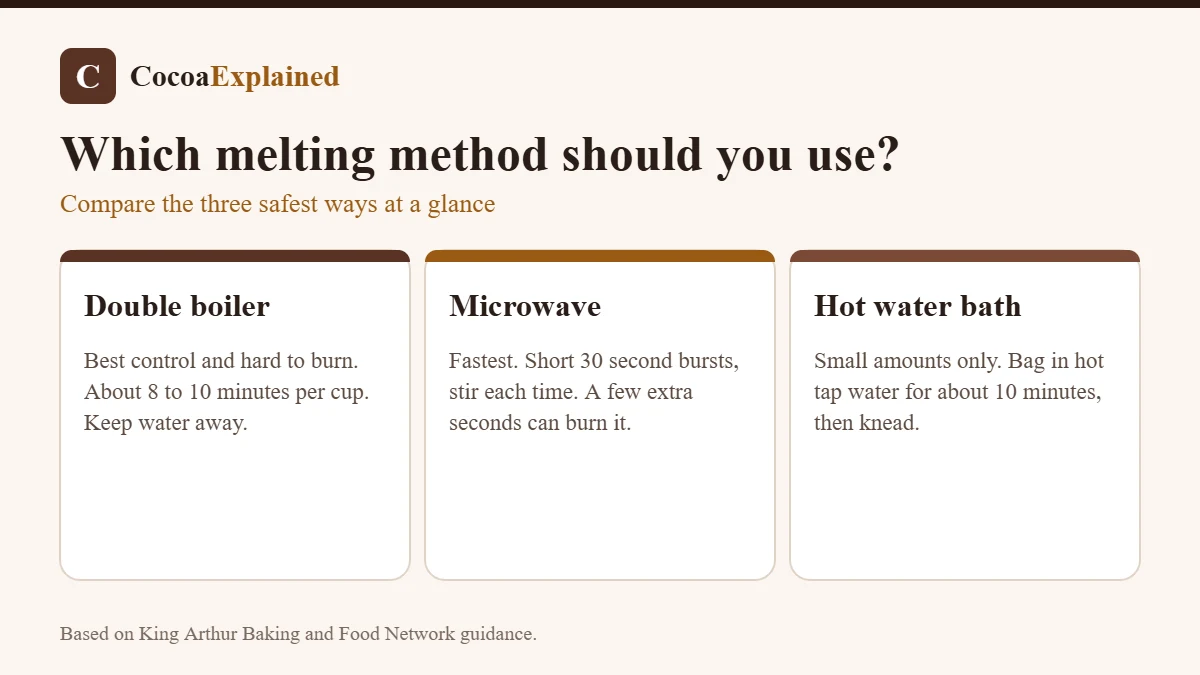
All three methods work. The right one depends on how much chocolate you have and how much control you want.
| Method | Best for | Time | Main risk |
|---|---|---|---|
| Double boiler (bowl over a pan) | Large amounts, tempering prep, baking | About 8 to 10 minutes per cup of chopped chocolate | Splashed water or steam makes it seize |
| Microwave | Quick jobs and small amounts | Around 90 seconds for a cup, in 30 second bursts | A few extra seconds can burn it |
| Hot water bag | Very small amounts for drizzling | About 10 minutes in hot tap water, then knead | Water getting into the bag |
The hot water bag method for small amounts
This is a neat trick for a quick drizzle and almost no washing up.
- Put chips or chopped chocolate in a zip-top bag and press out the air.
- Seal it, keeping the opening well above the water line.
- Submerge the bag in very hot tap water for about 10 minutes.
- Knead the bag gently until the chocolate is smooth.
- Snip a tiny corner off the bag and drizzle or pipe.
How much chocolate can you melt at once?
For large amounts, melt in stages. Melt about one cup first, stir in the next cup of chopped chocolate, and repeat until everything is smooth. The warm melted chocolate helps melt the new pieces, so you avoid scorching.
Which types of chocolate melt best?
| Type | How it behaves |
|---|---|
| Unsweetened, bittersweet and semisweet | More forgiving and harder to scorch |
| Milk chocolate | Lower melting point, so it scorches more easily. Use gentler heat. |
| White chocolate | Lower melting point too. Melt slowly and stir often. |
| Chocolate chips | Contain lecithin, which slows melting slightly, but they are fine to use |
| Bar chocolate | Chop evenly so all the pieces melt at the same speed |
Ingredients that make chocolate seize
Water is not the only culprit. As little as a quarter of a teaspoon of water can make chocolate seize, and so can a teaspoon of vanilla extract or other water-based flavourings. If a recipe adds liquid, melt the chocolate together with enough of the recipe’s liquid, such as cream, so it stays smooth instead of clumping.
What temperature should melted chocolate be?
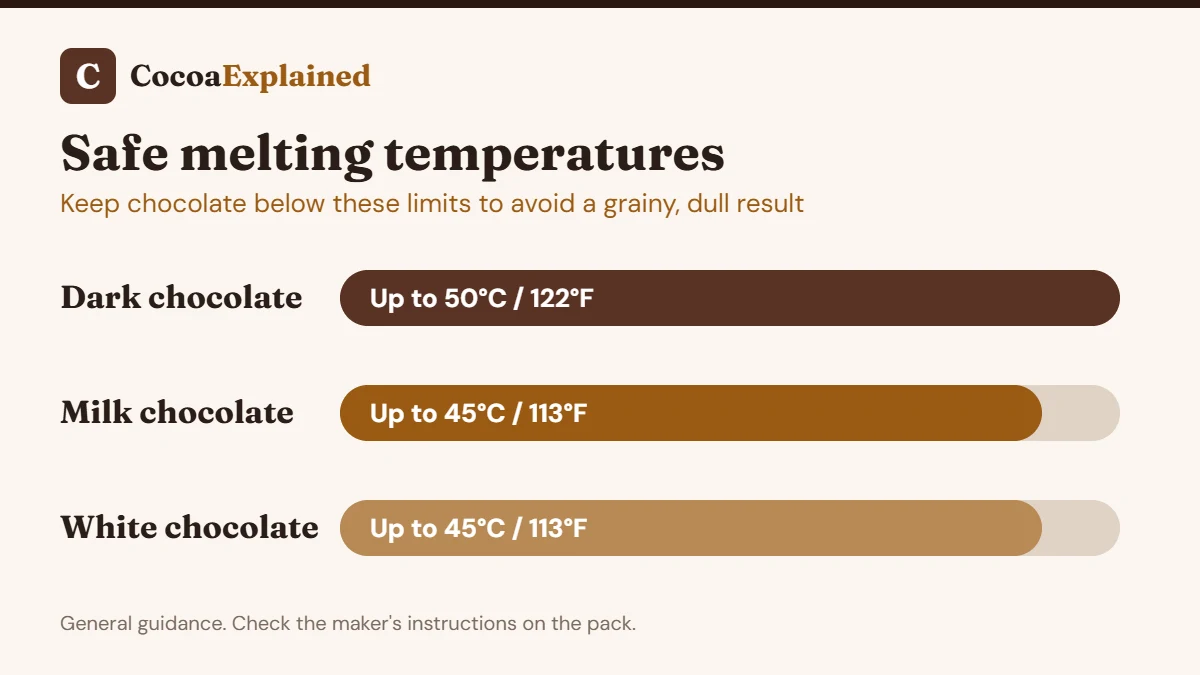
As a general guide, dark chocolate is happiest at up to about 50°C (122°F), while milk and white chocolate should stay under about 45°C (113°F). They contain milk solids and sugar, which scorch more easily. These are common baking guidelines, so check the pack if the maker gives different advice.
Why does chocolate go wrong when you melt it?
Almost every melting problem comes down to three things.

Water makes chocolate seize
Even a small drop of water or a puff of steam can make melted chocolate turn into a thick, stiff paste. This is called seizing. Dry your bowl and spoon well, and do not let steam reach the chocolate.
Too much heat makes it grainy or burnt
If chocolate gets too hot it turns dull, lumpy and bitter. Burnt chocolate cannot be saved, so keep the heat low and take the bowl off early.
Leaving it alone causes hot spots
Chocolate near the edges melts first and can scorch while the middle is still solid. Frequent stirring spreads the heat.
How to fix seized chocolate
If your chocolate has gone thick and grainy from a little water, you can often turn it into a smooth sauce. Stir in a little warm cream or a neutral oil, a teaspoon at a time, until it loosens. Some bakers use a splash of hot water, but others advise against adding water, so cream or oil is the safer choice. It will no longer be good for dipping or setting hard, but it works well in sauces, brownies, cakes and hot chocolate. If you want a drink, see hot chocolate vs hot cocoa.
What to make with melted chocolate
- Dipped fruit or biscuits (temper the chocolate first for a glossy, snappy finish)
- Chocolate sauce or ganache, using melted chocolate and warm cream
- Brownie, cake or cookie batter
- A drizzle over popcorn, pancakes or ice cream
- A mug of rich hot chocolate, as described in hot chocolate vs hot cocoa
Melting chocolate is not the same as tempering
Melting just turns chocolate into a liquid. Tempering is a careful heating and cooling process that gives chocolate a glossy finish and a clean snap once it sets. If your chocolate will be dipped, moulded or used for decorations, read how to temper chocolate at home. Fillings, sauces and baking do not need it.
Does the type of chocolate matter?
Yes. Real chocolate with cocoa butter melts smoothly and sets properly. Compound coatings use other fats and behave differently, as explained in couverture vs compound chocolate. Chips contain ingredients such as lecithin that help them hold their shape in cookies, so they can melt a little differently from a bar.
How to store leftover melted chocolate
Pour leftover chocolate onto baking paper, let it set, then break it up and keep it in a cool, dry place. You can melt it again later. Our guide on how to store chocolate has more tips.
Frequently asked questions
Can you melt chocolate chips?
Yes, but they melt a little differently because they are made to hold their shape in baking. Stir gently and add a small amount of neutral oil if you want a thinner drizzle.
Why is my melted chocolate thick and lumpy?
It has most likely seized from contact with water, or it has been overheated. If it is seized, try stirring in a little warm cream or oil. If it is burnt, start again with fresh chocolate.
Can I melt chocolate in a pan directly on the heat?
It is not a good idea. Direct heat is too strong and burns chocolate quickly. Use a double boiler or the microwave instead.
How long does it take to melt chocolate?
A double boiler usually takes a few minutes, depending on the amount. In the microwave, expect around two minutes in short bursts for a small bowl. Go slowly and stir often rather than rushing.
Do I need to temper chocolate after melting it?
Only if you want a glossy finish and a clean snap for dipping, coating or moulding. For baking, sauces and fillings, plain melted chocolate is fine.
Can you melt chocolate in a slow cooker or oven?
Some cooks do, but the double boiler and microwave give you more control, which is why most guides recommend them. If you try another method, keep the heat low and stir often.
Key points to remember
- Chop chocolate small and melt it gently.
- Keep bowls, spoons and steam away from water.
- Stir often and remove from the heat before the last lumps melt.
- Dark chocolate stays under about 50°C. Milk and white stay under about 45°C.
- Seized chocolate can still be used in sauces and baking.
Related guides
- How to Temper Chocolate at Home: Step-by-Step Guide
- Chocolate Chips vs Baking Chocolate: Which Is Better?
- Couverture vs Compound Chocolate: Key Differences
- How to Store Chocolate Properly: Temperature and Shelf Life
- Start here: a beginner’s guide to chocolate
- Browse all chocolate guides
- Why Does Chocolate Seize? How to Fix It
- How to Make Chocolate Ganache
- How to Thicken Hot Chocolate
Sources
- How to melt chocolate, King Arthur Baking.
- How to melt chocolate in the microwave and on the stove, Food Network.
Last updated: October 2026. This guide is educational and is not medical or nutrition advice. See our editorial policy.