How to Thicken Hot Chocolate: 7 Easy Ways That Work
The easiest way to thicken hot chocolate is a cornstarch slurry. Stir 1 teaspoon of cornstarch into 1 tablespoon of cold milk, whisk it into steaming hot chocolate and simmer gently until it thickens. If you would rather not use starch, melted chocolate, marshmallows or a spoonful of chocolate spread also add body.
Thin hot chocolate is a common problem, and the fix is simple once you know why it happens. In this guide we compare seven ways to thicken it, with amounts per cup, what each method does to the taste, and the mistakes to avoid. The advice comes from a home taste test and a chocolate maker’s guide, so we also point out where they disagree.
Short answer: use a cornstarch slurry for the strongest, cleanest result. Use more chocolate or marshmallows if you want a richer drink. Use full-fat milk, and do not let the drink boil hard.
Why is hot chocolate thin?
Hot chocolate is mostly milk, and milk is thin. A spoon or two of cocoa adds flavor but very little body. Low-fat milk makes the problem worse, and a chocolate maker says to avoid it if you want a thick, rich cup.
The type of drink matters too. A drink made from melted chocolate is naturally thicker than one made from cocoa powder and sugar. If you are not sure which you are making, read our guide to hot chocolate vs hot cocoa.
Seven ways to thicken hot chocolate
The chart and table below put the seven methods side by side. The amounts are per cup. The strength ratings come from one home tester, so treat them as a guide and not a law.
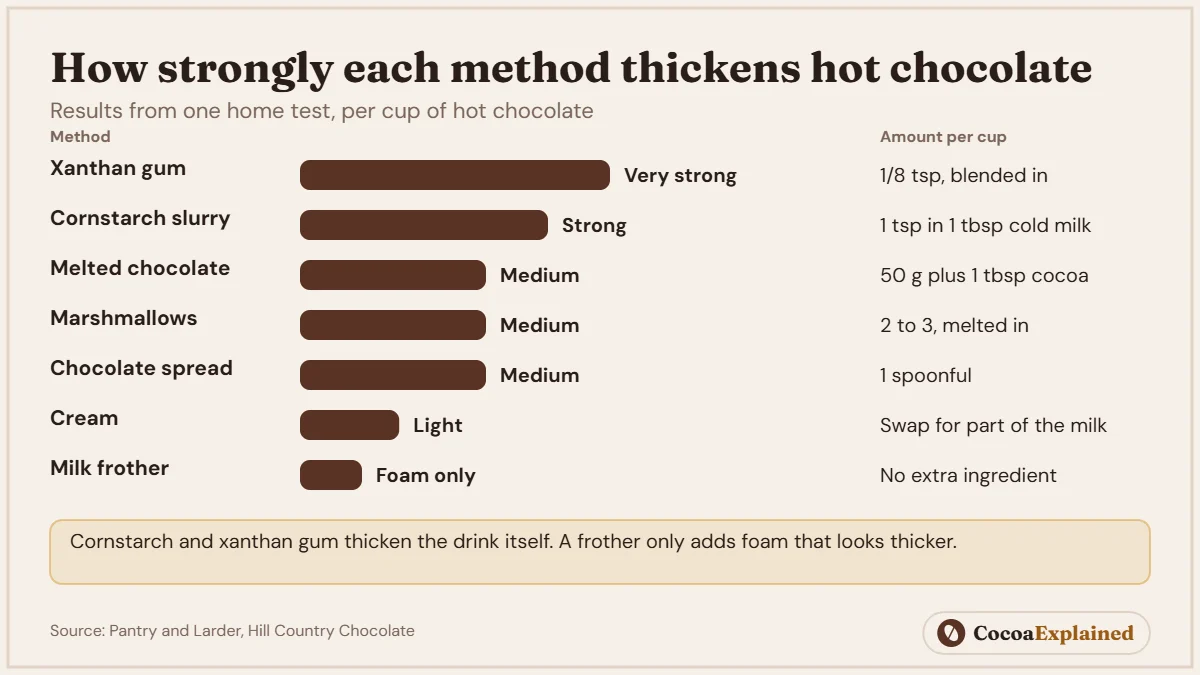
| Method | Amount per cup | How strong | Watch out for |
|---|---|---|---|
| 1. Cornstarch slurry | 1 tsp in 1 tbsp cold milk | Strong | Lumps if added dry. Needs heat to work. |
| 2. More chocolate | 50 g chocolate plus 1 tbsp cocoa | Medium | Gets very rich toward the end of the cup. |
| 3. Marshmallows | 2 or 3, melted in | Medium | Very sweet, so cut back on sugar. |
| 4. Cream or condensed milk | Swap for part of the milk | Light | Adds body more than thickness. |
| 5. Chocolate spread | About 1 spoonful | Medium | Already sweet, so add sugar last. |
| 6. Xanthan or guar gum | 1/8 tsp, blended in | Very strong | Slimy if you use too much. |
| 7. Gentle simmering | No extra ingredient | Varies | Takes time. Do not boil hard. |
Method 1: a cornstarch slurry
Cornstarch is the most reliable fix. The home tester rated it strong, with no change in flavor. It works because starch grains swell and thicken the liquid when they are heated. A food writer who explains starch says cornstarch switches on at about 203°F (95°C), which is close to a simmer.
The key is to mix the starch with something cold first. The same writer notes that hot liquid makes starch clump instantly, and the cold milk keeps the grains apart until they can thicken evenly. Here is how to do it.
- Make the slurry. Stir 1 teaspoon of cornstarch into 1 tablespoon of cold milk until it is smooth.
- Heat the hot chocolate until it is steaming and just starting to bubble at the edges.
- Whisk in the slurry and keep stirring over low heat for a minute or two.
- Check the texture. The tester says it can seem to do nothing and then thicken all at once, so wait before adding more.
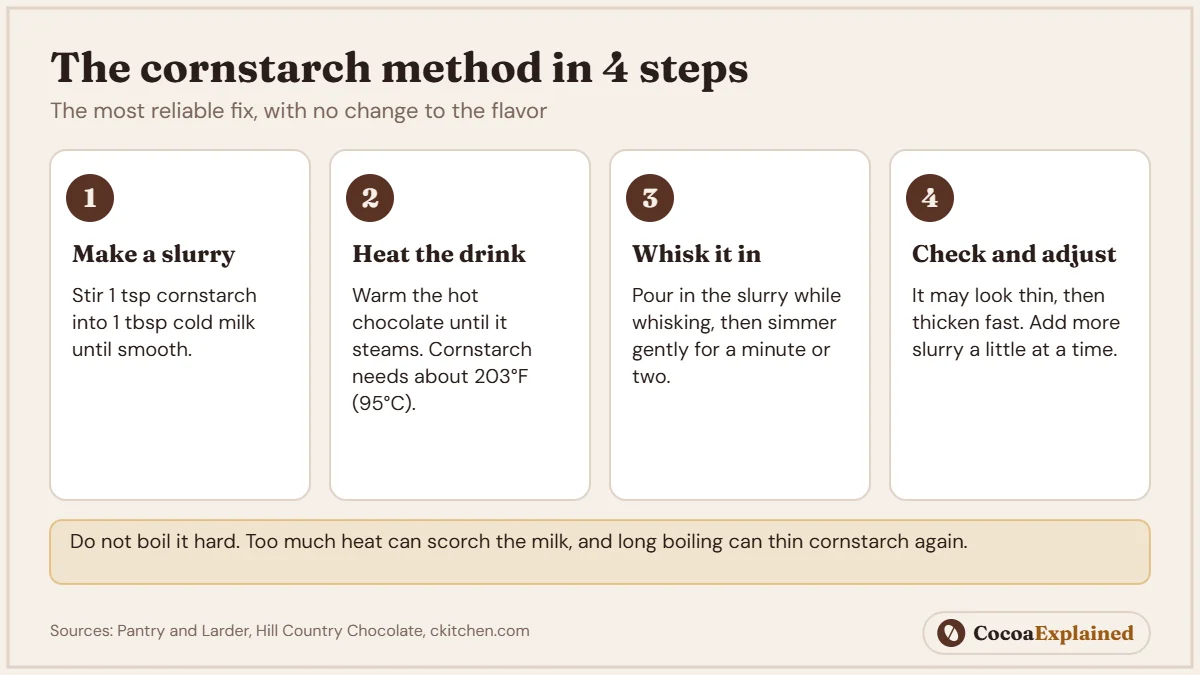
There is one point where our sources differ. The home test says cornstarch needs near-boiling heat to work. The chocolate maker warns against letting hot chocolate boil, because the cocoa and milk can separate or burn. A good middle path is a steady, gentle simmer on low heat with constant stirring. The starch writer also says cornstarch can thin again if it is boiled for too long, so do not overdo it.
Other starches work too, but the amounts and heat points change.
| Thickener | Amount (cornstarch = 1 tsp) | Heat needed | Note |
|---|---|---|---|
| Cornstarch | 1 tsp | About 203°F (95°C) | Mix into cold milk first. |
| Flour | About 2 tsp | About 185°F (85°C) | Cook at least 5 minutes to remove the raw taste. |
| Tapioca starch | About 2 tsp | Not stated | Suggested as a substitute, not tested by the author. |
| Potato starch | 1 tsp | About 140 to 150°F (60 to 65°C) | Suggested as a 1 to 1 swap, not tested by the author. |
| Arrowroot | Not recommended | Not stated | The tester says it does not work well with dairy. |
Method 2: add more chocolate
Real chocolate adds cocoa butter and cocoa solids, which give a fuller, silkier drink. The home tester used 50 g (1.75 oz) of chocolate plus 1 tablespoon of cocoa powder per cup and called the thickening medium. The chocolate maker suggests about 100 g of dark chocolate with 70 percent cocoa or more for roughly 300 ml of milk, which is a richer, heavier cup.
Chop the chocolate finely and melt it into warm milk while you stir. Our guide on how to melt chocolate shows how to do it without scorching, and the cocoa percentage on the pack tells you how bitter the result will be. The tester warns that a full portion can feel sickly sweet or heavy by the end, so a smaller serving is wise.
Method 3: marshmallows
Melted marshmallows are the tester’s favorite. Two or three stirred in until they dissolve thicken the drink to a medium level and make it light and frothy. Add a few on top as well. The only trade-off is sweetness, so hold back on any added sugar.
Methods 4 and 5: cream, condensed milk and chocolate spread
Cream. Swapping some of the milk for cream gives a fuller, creamier mouthfeel. Here the sources do not fully agree. The home tester found cream only a weak thickener, though it improved the body. The chocolate maker lists a splash of heavy cream and some sweetened condensed milk as ways to thicken. No amount is given for the condensed milk, so add a little and taste as you go.
Chocolate spread. About one spoonful, stirred in until smooth, gave a medium thickness and a rich flavor. It is already sweetened, so add any extra sugar at the end. The flavor of the spread will come through strongly, so pick one you like.
Method 6: xanthan gum or guar gum
Gums are the strongest option. The tester used 1/8 teaspoon of xanthan gum per cup, which is about 0.1 to 0.5 percent of the weight of the liquid, and rated it very strong. Guar gum can be swapped in at the same amount. The risk is using too much, which gives a slimy texture. Gums also clump unless they are blended in, and the chocolate maker adds that guar should be mixed with a little cold milk first. Use a blender or a small whisk and add the gum slowly.
Method 7: simmer it gently
The chocolate maker also suggests simmering over low heat so the drink reduces and thickens slowly. This adds no new ingredient, but it takes patience and constant stirring. Keep the heat low, because boiling can make the milk and cocoa separate or burn.
Ways we would skip or treat with care
- Milk frother. It adds foam that looks thicker, but it does not thicken the liquid itself.
- Ground flax or chia. The tester found them gel-like and grainy, and the flax tasted distinct.
- Egg yolk. One maker suggests a yolk per 12 oz of liquid for richness. We left it out of our steps because raw or lightly cooked egg raises a food safety question that our sources do not cover.
Common mistakes
- Adding dry starch straight to hot milk, which makes lumps. Always mix it with cold liquid first.
- Boiling hard. The cocoa and milk can separate or burn.
- Using low-fat milk and expecting a rich, thick result.
- Dropping cold ingredients straight into the hot pot. Warm them up gradually.
- Adding too much of a strong thickener at once. Start small and wait, because starch can take a moment to work.
- Forgetting that thickened hot chocolate can set. If it turns too thick or gel-like as it cools, reheat it gently and whisk in a splash of warm milk.
If your chocolate turns grainy or stiff when it meets liquid, see why it happens in our guide to why chocolate seizes. For an even thicker, spoonable treat, you can try making chocolate ganache.
A last tip on flavor: a pinch of salt, a little cinnamon or nutmeg, or a drop of vanilla lifts the taste without changing the thickness.
Frequently asked questions
How do you thicken hot chocolate quickly?
Stir 1 teaspoon of cornstarch into 1 tablespoon of cold milk until smooth. Whisk it into steaming hot chocolate and simmer gently, stirring, until it thickens. It can look thin for a moment and then thicken suddenly.
How much cornstarch do you need for hot chocolate?
One home test used about 1 teaspoon of cornstarch per cup, mixed with 1 tablespoon of cold milk first. Start there and add a little more slurry only if the drink is still too thin.
How do you thicken hot chocolate without cornstarch?
Melt in more chocolate, add 2 or 3 marshmallows, stir in a spoonful of chocolate spread, or swap some of the milk for cream. Flour also works at about double the amount of cornstarch, but it needs at least 5 minutes of cooking to remove the raw taste.
Why is my hot chocolate watery?
Hot chocolate is mostly milk, so a small amount of cocoa gives little body. Low-fat milk makes it thinner still. Use full-fat milk and enough chocolate, or add a thickener such as cornstarch.
Can you thicken hot chocolate with xanthan gum?
Yes, but use very little. One tester used about 1/8 teaspoon per cup and blended it in well. Too much gives a slimy, mucus-like texture, and it can clump if it is not blended.
How do you keep hot chocolate thick?
Keep it warm and stir it now and then. Starch-thickened drinks can turn gel-like or release water as they cool. Reheat gently and whisk, and add a splash of warm milk if it has become too thick.
Key points to remember
- Hot chocolate is thin because it is mostly milk.
- A cornstarch slurry is the most reliable fix: about 1 teaspoon per cup, mixed with 1 tablespoon of cold milk.
- Melted chocolate, marshmallows and chocolate spread thicken and add richness, but also sweetness.
- Gums are very strong, so use only 1/8 teaspoon per cup.
- Use full-fat milk, keep the heat gentle and do not let it boil hard.
Related guides
- Hot Chocolate vs Hot Cocoa
- How to Melt Chocolate
- How to Make Chocolate Ganache
- Why Does Chocolate Seize?
Sources
- How to Thicken Hot Chocolate, Pantry and Larder.
- How to Thicken Hot Chocolate, Hill Country Chocolate.
- Everything You Didn’t Know About Starch, ckitchen.com.
Last updated: November 2026. This guide is educational and is not medical or nutrition advice. See our editorial policy.