Chocolate Chips vs Baking Chocolate: Which Is Better?
Ther
Usually yes. Chop the bar into small pieces and use the same weight. The result will melt into a smoother pool than chips, which hold their shape because of added stabilisers. Yes, they are chocolate, but they often contain stabilisers such as soy lecithin that help them keep their shape when baked. That is why they behave differently from a bar.Can I swap chocolate chips for a chocolate bar in a recipe?
Are chocolate chips real chocolate?
Both are real, useful ingredients. They are just designed to do different jobs. Chips are made to keep their shape in heat. Baking bars are made to melt. Once you understand that, the choice gets much easier. This guide explains what is actually different, what the labels like semisweet and bittersweet mean, when each one works best, and whether you can swap one for the other. If you want to understand how cocoa content is described on packs, our guide to what the cocoa percentage means is a good companion read.
What chocolate chips are
Chocolate chips, sometimes sold as “morsels”, are small chocolate drops designed to survive the oven. Makers formulate them with ingredients that help them hold their shape when baked, such as a slightly lower proportion of cocoa butter, and often an emulsifier like soy lecithin and sometimes stabilisers.
That is why a cookie baked with chips has distinct chocolate dots. The chips soften but stay recognisable instead of spreading into the dough. It is a useful property when you want pockets of chocolate with a bit of bite, or when you are making muffins and scones where you do not want chocolate sinking to the bottom.
The same quality makes chips a little frustrating if you want to melt them. Because they are built to resist flowing, melted chips are usually thicker and can be harder to work with in ganache, glazes and sauces.
What baking chocolate is
Baking chocolate usually comes as a bar or block and is made to melt cleanly into batters, sauces and desserts. It tends to have a higher cocoa butter content than chips, so it flows smoothly and mixes evenly into whatever you are making.
Common types you will find include:
- Unsweetened chocolate is pure chocolate liquor, the ground cocoa bean, with no sugar. It is bitter on its own and is meant to be balanced by the sugar in a recipe.
- Bittersweet and semisweet chocolate contain sugar and more or less cocoa. In the United States, both must contain at least 35 per cent chocolate liquor, and there is no strict legal line between them. Bittersweet generally means less sugar and a more intense flavour, while semisweet is a little sweeter.
- Milk and white baking chocolate are sweeter and milder, used where a creamy sweet flavour is wanted.
Fancy “couverture” is a premium kind of baking chocolate with extra cocoa butter that is popular for professional work. We cover it in couverture vs compound chocolate.
Chips vs baking bars: the key differences
| Chocolate chips | Baking chocolate bars | |
|---|---|---|
| Designed to | Keep their shape in the oven | Melt smoothly |
| Cocoa butter | Often lower; stabilisers common | Usually higher |
| Melted result | Thicker, can be stiff | Smooth and fluid |
| Texture in cookies | Distinct chocolate pieces | Melted pools and streaks |
| Convenience | Ready to use | Needs chopping |
| Price | Usually lower | Usually higher per kilo |

Which is better for cookies?
It depends on the cookie you want.
- Chips give neat, uniform pieces of chocolate that stay put. They are the classic choice for a traditional cookie, and they are handy for kids’ baking and quick batches.
- Chopped bars or chunks give a more rustic, bakery-style cookie. The uneven pieces melt into layers and puddles and create thin shards of chocolate among larger pockets. Many bakers say this gives a richer, more luxurious chocolate flavour.
- A mix of both is a good compromise: chips for structure and a few chopped pieces for the melty bits.
If you want the melted-pool look, chop a bar with a serrated knife into pieces of varied size, including some dust. The fine shavings help flavour the dough itself.
Which is better for melting?
For ganache, mousse, glazes, sauces, fudge and anything where you need chocolate to melt into liquid, baking bars are the better choice. They melt smoothly and fluidly with less risk of thick, grainy results.
If you only have chips, you can still melt them, but be gentle. Use low heat, stir constantly and consider adding a little extra cream or butter to loosen the mix. Avoid overheating, and keep water away, because even a drop can make chocolate seize into a stiff paste.
Can you swap one for the other?
- Chips instead of a bar in cookies: Yes. The cookie will have more defined chocolate dots and less melted texture.
- A chopped bar instead of chips: Yes. Use the same weight. Expect more melted chocolate and a slightly different appearance.
- Chips for ganache or sauce: Possible, but you may need to adjust the cream and stir carefully. Results can be thicker.
- Unsweetened chocolate for semisweet: Not a straight swap. You must add sugar to balance the bitterness and adjust the recipe accordingly.
When swapping by weight, a 170 g (6 oz) bag of chips is roughly equivalent to the same weight of a chopped bar. Check the recipe, because some call for volume.

How to read the label
Do not be swayed by the front of the pack. Look at the ingredient list and the cocoa percentage.
- Check the cocoa percentage on bittersweet and semisweet products. Higher means more intense and less sweet.
- Look for cocoa butter in the ingredients rather than vegetable oils, if you want real chocolate that melts well. Compound coatings are different, as explained in couverture vs compound.
- Notice emulsifiers. Lecithin is normal and harmless. It helps the chocolate flow and hold its shape.
- Think about sweetness. If a recipe was written for semisweet chips and you use a 85% bar, you may need more sugar.
Which should you use for each recipe?
| Recipe | Best choice | Why |
|---|---|---|
| Cookies with melty pools of chocolate | Chopped bar or chunks | Bars melt into a smoother, shinier pool |
| Cookies where you want visible chips | Chips | Stabilisers help them keep their shape |
| Ganache, mousse and pot de creme | Bar | Smooth melting and a better texture |
| Tempering | Bar | No added stabilisers to interfere |
| Quick drizzle or fast melting | Either | Chips need no chopping, but bars melt more smoothly |
| Muffins, pancakes and granola bars | Chips | They stay in neat pieces |
Why chips look melted but feel waxy
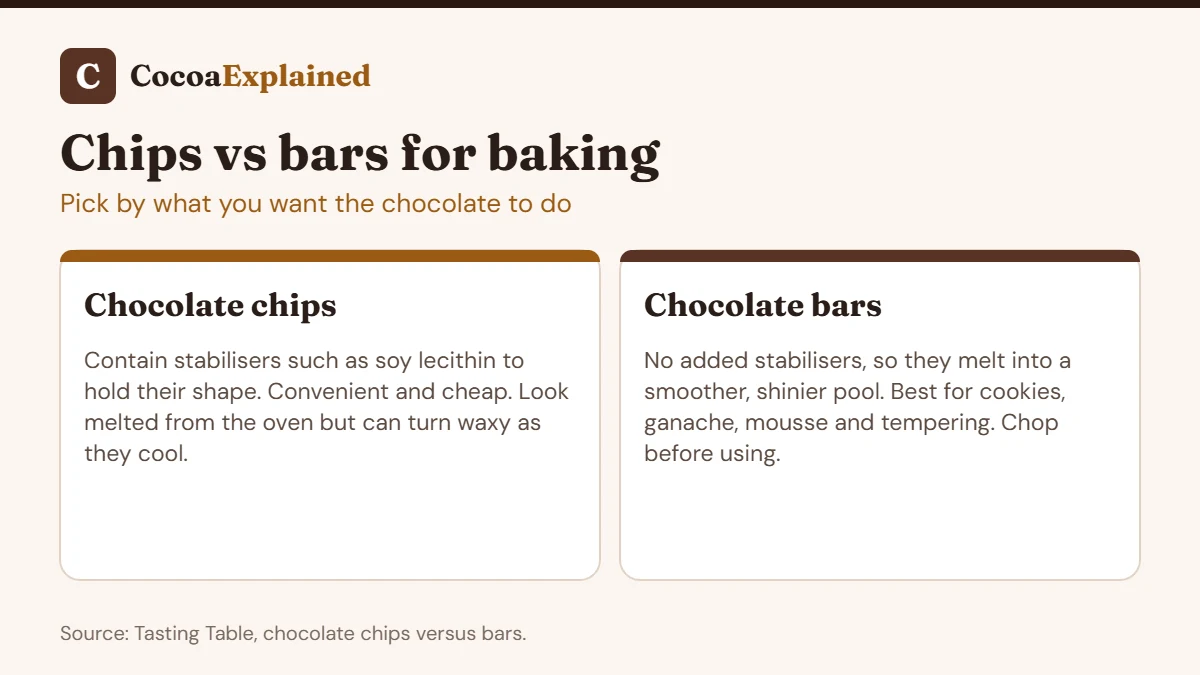
Chocolate chips contain stabilisers, such as soy lecithin, that help them hold their shape in the oven. They can look glossy and melted when the cookies come out, then turn waxy or gritty as they cool. A chopped bar has no such stabilisers, so it melts into a smooth, shiny pool that stays creamy.
If you only have chips
- Choose a good bag and read the ingredients, picking one with the fewest stabilisers.
- Melt them gently, as in how to melt chocolate, because they melt a little differently from a bar.
- Chips are fine for casual baking. Save bars for recipes where texture matters.
Practical tips
- Chill the dough and the chips for neater cookies that keep their chocolate pieces.
- Chop bars right before using, and include fine shavings for flavour.
- Store chocolate in a cool, dry place. See how to store chocolate.
- If a recipe works well with chips, do not feel you have to “upgrade” to bars. Use what fits the job.
The short version
Chips are built to hold their shape and give neat chocolate dots in cookies and muffins. Baking bars are built to melt, which suits ganache, sauces and cookies with melted pools. You can swap them by weight in most recipes, but expect the texture to change. Choose chips for convenience and structure, bars for richness and smooth melting, and a mix of both when you want the best of each.
Frequently asked questions
Can I use chocolate chips instead of baking chocolate?
Often yes in cookies, but chips melt less smoothly, so they are not ideal for ganache, sauces or silky batters. Use a chopped bar for those.
Why don’t chocolate chips melt smoothly?
They are made to hold their shape in the oven, so they are thicker when melted and can turn stiff or grainy. A baking bar is formulated to melt more fluidly.
Are baking chocolate and dark chocolate the same?
Not always. Baking chocolate can be unsweetened, containing no sugar, or sweetened to different levels. Check the label and percentage.
Can I use a chocolate bar in cookies?
Yes. Chop it into chunks. The pieces melt into pools and shards that many bakers prefer to chips.
What does unsweetened baking chocolate mean?
It is 100% cocoa ingredients with no added sugar. It is very bitter and is meant to be used in recipes that add their own sugar.
Key points to remember
- Chips hold their shape; baking bars melt smoothly.
- Use chips for neat chunks and bars for brownies, ganache and sauces.
- You can swap chips for a chopped bar by weight in most cookies.
- Watch sugar levels when swapping unsweetened chocolate for sweetened chips.
- Check the cocoa percentage for the flavour you want.
Related guides
- Couverture vs Compound Chocolate: Key Differences
- Natural vs Dutch-Process Cocoa Powder: Which to Use?
- How to Temper Chocolate at Home: Step-by-Step Guide
- What Does Cocoa Percentage Mean on Chocolate?
- How to choose good chocolate
- How to Melt Chocolate Without Burning It (3 Easy Ways)
- Does Chocolate Expire? How Long It Really Lasts
- Start here: a beginner’s guide to chocolate
- Browse all chocolate guides
- Free cheat sheet: how to read any chocolate label
- Semisweet vs Bittersweet Chocolate: Which Should You Use?
- How to Make Chocolate Ganache
Sources
- Friars: Baking with chocolate, what type to use and when
- Tasting Table: Substituting chocolate chips for baking chocolate
- The Baking Chocolate Co: Choosing the right chocolate for baking
- Baking with chocolate chips vs. chocolate bars, Tasting Table.
Last updated: October 2026. This guide is educational and is not medical or nutrition advice. See our editorial policy for how we research and write.