What Is Ruby Chocolate? The Pink Chocolate Explained
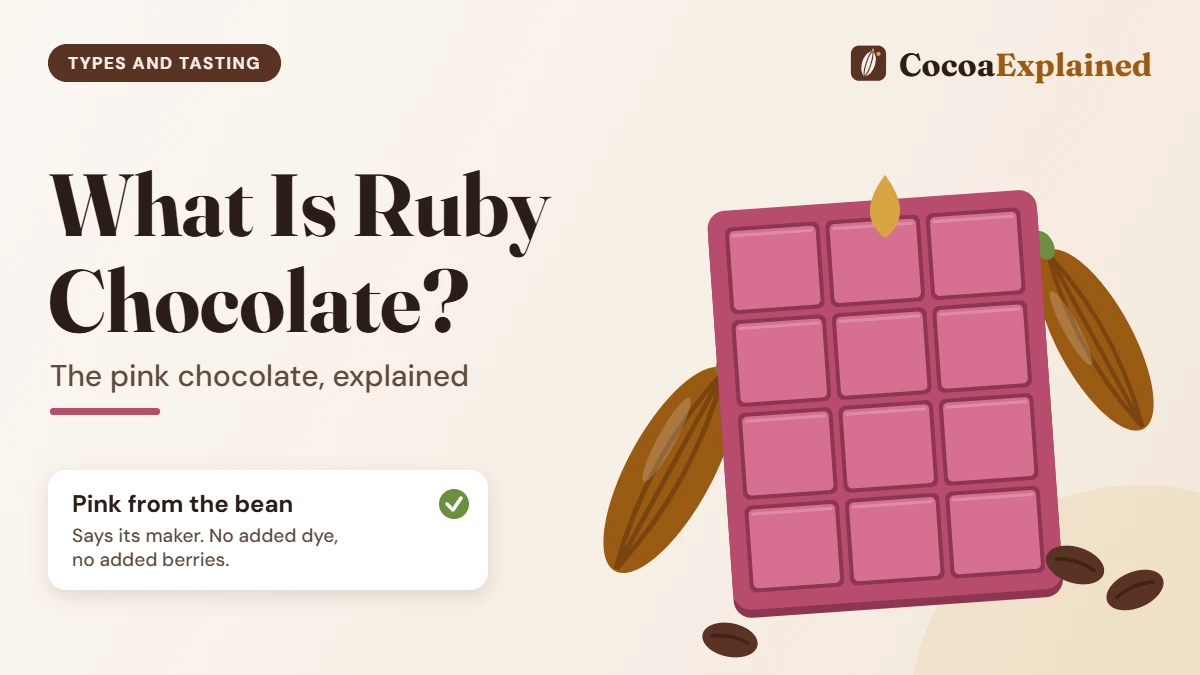
You have probably seen it by now. A bar of chocolate in a soft, dusty pink, sitting in the airport shop or tucked between the usual browns and creams. No flashy wrapper trick, no obvious dye. It looks like someone poured a strawberry milkshake into a mould. And the first question is nearly always the same: is this actually chocolate, or just white chocolate with food colouring?
The short answer, according to the company behind it, is that it is real chocolate made from a particular kind of cocoa bean, with nothing pink added. The longer answer is more interesting, and a little more complicated. This guide covers where ruby chocolate came from, what its maker says makes it pink, what it tastes like and whether it really deserves the title of “fourth type of chocolate”. We have also added a simple way to taste it, so you can make up your own mind. If you are new to all this, our guide to what chocolate actually is is a good place to start.
The short version
- What it is: a pink chocolate launched by Barry Callebaut in 2017 and made from what the company calls ruby cocoa beans.
- The colour: the company says it is natural, with no added colouring or berry flavouring.
- The taste: sweet, creamy and tangy, with a berry-like edge. Closer to white chocolate than to a dark bar.
- The debate: some call it a fourth type of chocolate, others call it a clever new product. Both camps have a point.
- Worth trying? Yes, if you like fruity, creamy flavours. Probably not if you love deep, bitter dark chocolate.
Where ruby chocolate came from
Ruby did not appear overnight. Barry Callebaut, the Belgian-Swiss company that supplies chocolate to bakers, confectioners and big brands, says it spent about 13 years developing it, starting in 2004. On 5 September 2017, at an event in Shanghai, the company showed it to the world and called it the fourth type of chocolate after dark, milk and white.
The timing helped. Pink was everywhere in the late 2010s, on phone cases, in cafes and across Instagram feeds, and a pink chocolate that needed no dye was an easy story to tell. Nestle launched Kit Kat Ruby on 19 January 2018 in Japan and South Korea, and it later reached other countries, including the UK, Germany and Canada. A pure ruby bar went on sale at Fortnum & Mason in London in April 2018. Ice creams, cafe drinks and plenty of limited editions followed.
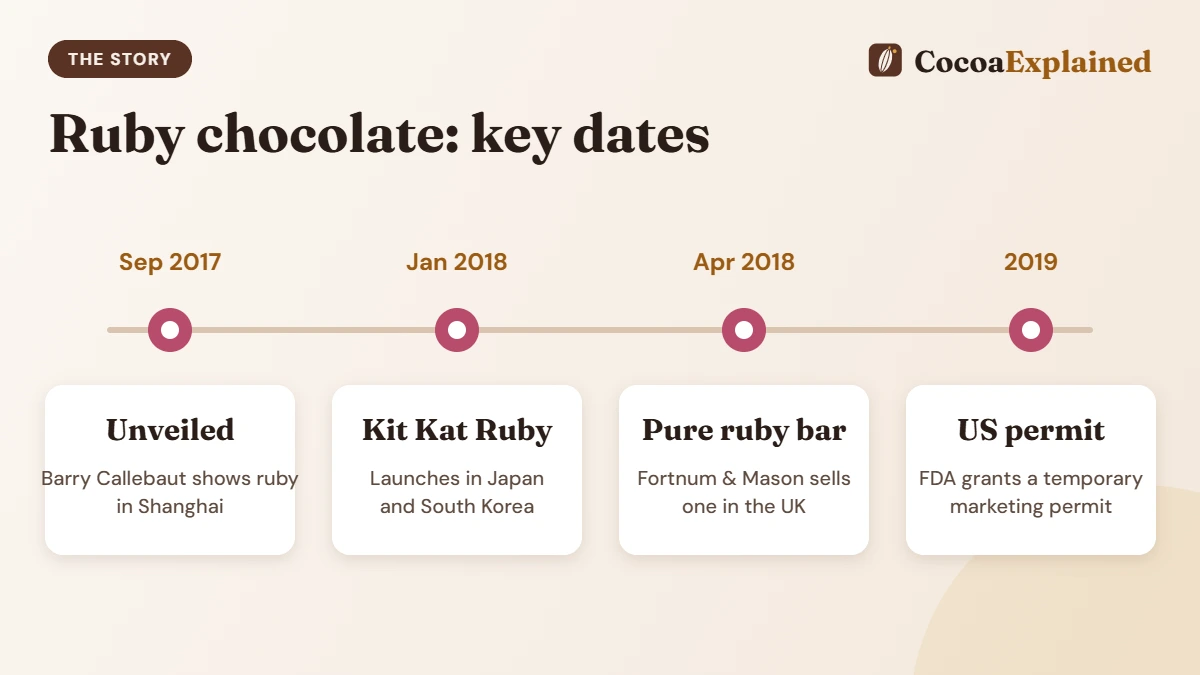
The United States added one more hurdle. American rules define chocolate quite narrowly, and in 2019 the FDA granted a temporary marketing permit so ruby could be sold there. Hold on to that detail, because it comes back in the “fourth type” debate below.
Why is ruby chocolate pink?
Here is the part most people do not know: fresh cacao beans are not brown. Inside the pod they are pale, purple or pinkish. The familiar dark colour and classic chocolate flavour develop later, mainly during fermentation and roasting. If you would like to see how that works, our guide to how cacao beans become chocolate walks through every step.
Ruby chocolate is built on that starting point. Barry Callebaut says the pink colour comes from specially selected ruby cocoa beans and a particular way of processing them, and that no colouring or berry flavouring is added. The exact recipe is a trade secret, but the company’s patent filings offer some clues. They describe beans that are unfermented or only briefly fermented, which are then treated with an acid such as citric acid. That treatment brings out a red or purple tone. After that, the cocoa material is turned into chocolate in the usual way.
Two small notes. First, these are not a brand-new species of bean. They are existing cocoa varieties that the company found behave in the right way. Second, because the process is secret, outsiders cannot independently confirm every detail. That is why this guide keeps saying “according to the company”. It is not doubt, just accuracy.
What does ruby chocolate taste like?
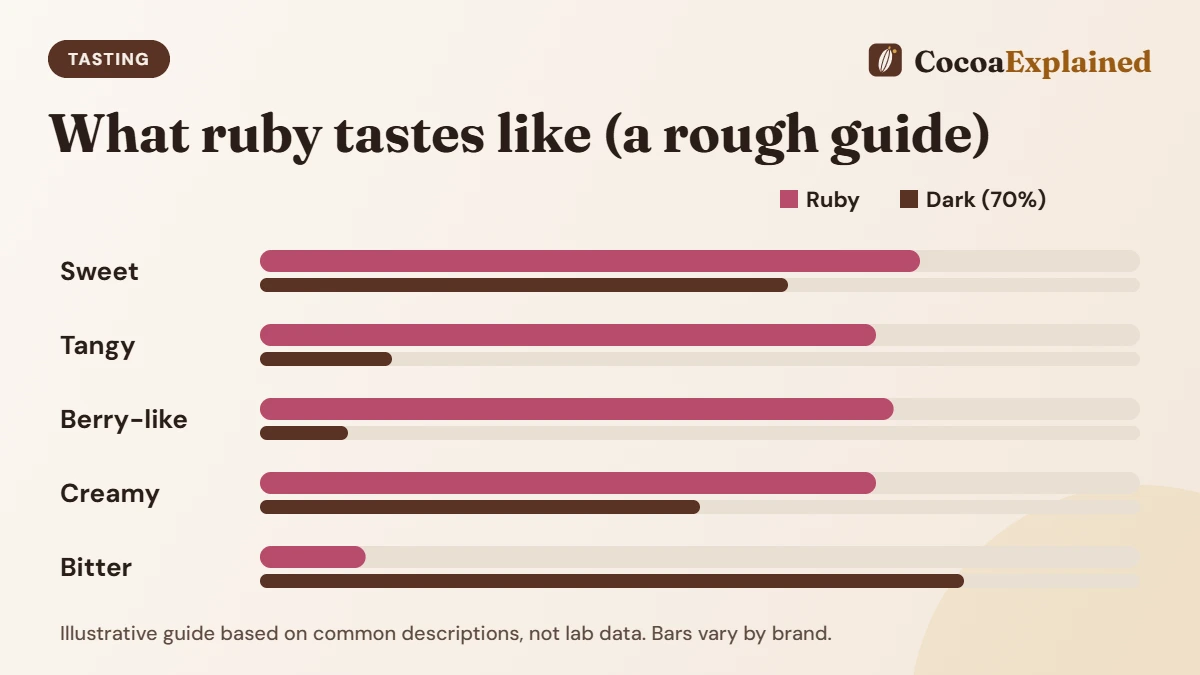
If you are expecting strawberry, adjust your expectations. The flavour people describe most often is a mix of sweet, creamy and tangy, with a berry-like, almost raspberry feel. The company says it comes from the bean and its acidity, not from added fruit. One magazine editor compared it to white chocolate with raspberries, which is a pretty fair mental picture.
It is also noticeably different from the other three. Dark chocolate leads with bitterness and roasted notes. Milk chocolate is soft and caramel-like. White is plain, creamy sweetness. Ruby sits close to white and milk in sweetness but adds a sharp, fresh edge that cuts through the richness. People who find white chocolate a bit cloying sometimes love that edge. People who adore deep, bitter dark chocolate may find ruby too sweet.
Is ruby really the fourth type of chocolate?
This is where chocolate lovers start arguing. The case for “yes” is simple: ruby has its own colour, its own flavour and its own production method, and it is not just a flavoured version of something else. The case for “not so fast” is that small makers have produced pinkish chocolate from certain beans for years, and “fourth type” is also an excellent marketing line. Others point to the FDA permit mentioned earlier. The agency said ruby meets most of the usual requirements but differs in its final composition, taste and colour, which is why it needed a special route to market.
Our view is a practical one. Ruby is genuinely different from dark, milk and white, and whether it earns the word “type” depends on how strict you want to be. For you as a buyer, what matters more is knowing what you are actually eating. Here is how the four compare at a glance.
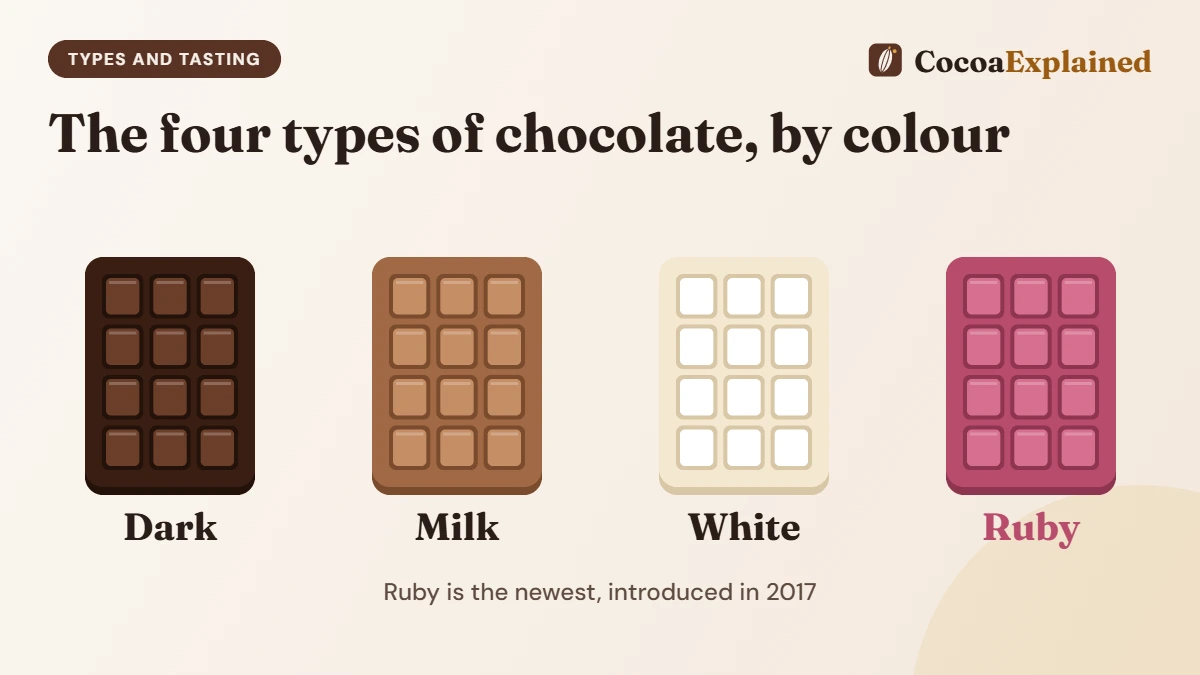
| Dark | Milk | White | Ruby | |
|---|---|---|---|---|
| Colour | Dark brown | Light brown | Ivory | Pink |
| Main taste | Rich, bitter | Creamy, sweet | Creamy, sweet | Creamy, tangy, berry-like |
| Cocoa solids | High | Medium | None | Low |
| Colour source | Roasted cocoa | Roasted cocoa and milk | Cocoa butter, milk, sugar | Ruby cocoa bean (per the maker) |
For a closer look at the other three, see our guide to dark, milk and white chocolate, and our explainer on whether white chocolate is real chocolate.
What is actually in a ruby bar?
Ingredients vary by brand, but a typical ruby chocolate lists cocoa butter, cocoa mass, milk powder, sugar and citric acid. The acid does a lot of the work, both for the colour and for the tang. Cocoa solids are lower than in a dark bar, so there is less of that bitter, roasted cocoa flavour. For the US permit, the FDA set the minimum at 20 percent cacao fat and 1.5 percent non-fat cacao solids, which gives you an idea of how little cocoa the definition requires.
So do not think of it as a health choice. Ruby is a sweet chocolate, no more and no less indulgent than milk or white. If you are after the plant compounds people connect with dark chocolate, our guide on whether dark chocolate is actually healthy explains what is known and what is not.
Where to find it, and what to look for
Availability changes a lot from country to country. You will usually find ruby in a few forms: as a bar from specialist chocolate brands, as a coating on wafer and biscuit bars, as chips or callets for bakers, and in seasonal ice creams and drinks. When you shop, look for “ruby chocolate” or “ruby cocoa beans” on the label and a short ingredient list.
Be a little careful with pink bars that list artificial colour or strawberry flavouring. They can be perfectly nice, but they are usually white chocolate coloured pink, which is a different product. Neither is wrong, you just want to know which one you are buying. Our guide to choosing good chocolate has a quick label check that works for any bar.
How to taste ruby chocolate in five minutes
You do not need any special equipment. A small piece and a bit of patience will do.
- Start at room temperature. A cold bar hides flavour. Let it sit out for ten minutes.
- Look and smell first. Notice the colour, then snap a piece and sniff. Many people pick up a fruity, slightly sour note straight away.
- Let it melt. Place a small piece on your tongue and wait about 20 seconds before chewing. The tang usually arrives after the sweetness.
- Compare. Try a square of white or milk chocolate right after. The difference in tartness is the easiest way to understand ruby.
- Add a partner. Fresh raspberries, strawberries or a plain biscuit all work well, and a few pistachios add a nice crunch.
For a fuller routine you can use with any bar, see how to taste chocolate.
Ways to use it at home
Bakers like ruby mostly for its colour, and it is easy to make a plain dessert look special. A few simple ideas: drizzle melted ruby over shortbread or a vanilla cake, dip strawberries or raspberries, fold it into a ganache for filled chocolates or macarons, or shave it over a pavlova.
One practical warning. Makers advise treating ruby gently, because high heat and long exposure to light can dull the pink. Melt it slowly, add it near the end of a recipe instead of baking it for a long time, and keep finished treats out of bright sun. Store the bar like any other chocolate, somewhere cool, dry and away from strong smells (more in how to store chocolate). If it ever turns pale or streaky, that may be bloom, which is harmless and explained in why chocolate turns white.
Who will like ruby, and who might not
If you enjoy fruity flavours, creamy textures and a lighter kind of sweetness, ruby is likely to be a pleasant surprise. It also makes a nice gift because it looks so different from a standard bar. If your favourite chocolate is 85 percent dark with a bitter finish, ruby will probably feel too sweet, and you may prefer our guide to single-origin chocolate instead. Whichever side you land on, it is worth trying one small bar. It costs very little to find out.
Frequently asked questions
Is ruby chocolate naturally pink?
According to its maker, yes. Barry Callebaut says the pink colour comes from ruby cocoa beans and the way they are processed, not from added colouring. The exact method is a trade secret, so outside experts cannot check every detail.
Does ruby chocolate contain berries or dye?
The company says no colouring and no berry flavouring are added. The fruity, tangy taste comes from the bean and from acidity, usually citric acid. Always read the ingredient list on the specific product you buy, because other pink chocolates may use colour or flavour.
Is ruby the fourth type of chocolate?
Barry Callebaut calls it the fourth type after dark, milk and white. Some chocolate writers agree it is a new category, while others see it as a clever new product and point out that pink cocoa has been made on a small scale before. Both views are reasonable.
What does ruby chocolate taste like?
Most people describe it as sweet and creamy with a tangy, berry-like edge, a bit like white chocolate with raspberries. It is less bitter than dark chocolate. Taste varies by brand.
Is ruby chocolate healthier than other chocolate?
No. It is a sweet chocolate with a lower cocoa content than dark chocolate, so treat it as a treat. If you want more cocoa, a good dark bar is the better choice.
Can you bake with ruby chocolate?
Yes, for drizzles, ganache, fruit dipping and decoration. Makers advise gentle heat and limited light, because the pink can dull when it is baked for long. Add it near the end where you can.
Key points to remember
- Ruby chocolate was unveiled by Barry Callebaut on 5 September 2017 after about 13 years of work.
- The company says its pink colour and berry-like taste come from ruby cocoa beans, with no added colour or fruit flavour.
- Patent filings describe unfermented or lightly fermented beans treated with an acid such as citric acid, but the full process is secret.
- It tastes sweet, creamy and tangy, closer to white chocolate than dark.
- Whether it is a true fourth type of chocolate is debated, and the US needed a temporary permit to allow it.
- It is a sweet treat, not a health food. Check the label to be sure of what you are buying.
Keep reading
- Dark, milk and white chocolate: what is the difference?
- How to taste chocolate like a pro
- How to choose good chocolate
- What is chocolate, really?
Related guides
- Dark, Milk and White Chocolate: The Real Differences
- What Is Chocolate, Exactly?
- What Is Milk Chocolate Made Of?
- Is White Chocolate Real Chocolate? What the Rules Say
- Start here: a beginner’s guide to chocolate
- Browse all chocolate guides
Sources
- Wikipedia: Ruby chocolate
- Barry Callebaut: FDA advances Ruby as the fourth type of chocolate
- Smithsonian Magazine: Swiss chocolatiers introduce new type of chocolate, pink
Last updated: October 2026. This guide is educational and is not medical or nutrition advice. See our editorial policy for how we research and write.