How to Store Chocolate Properly: Temperature and Shelf Life
Chocolate looks tough. It is a solid slab you can toss into a bag and forget about. But it is surprisingly fussy about where it lives. Leave a bar in a warm car and it turns soft and streaky. Put it in a cold fridge next to last night’s curry and it can come out smelling of onions. Keep it in a damp cupboard and it grows a rough white crust.
The good news is that storing chocolate well is not complicated. It comes down to four things: temperature, humidity, air and smell. This guide covers the right conditions, how long different kinds last, whether the fridge or freezer is ever a good idea, and what to do if you live somewhere hot and humid. If your chocolate has already gone pale, our guide on why chocolate turns white explains what happened.
The ideal conditions for chocolate
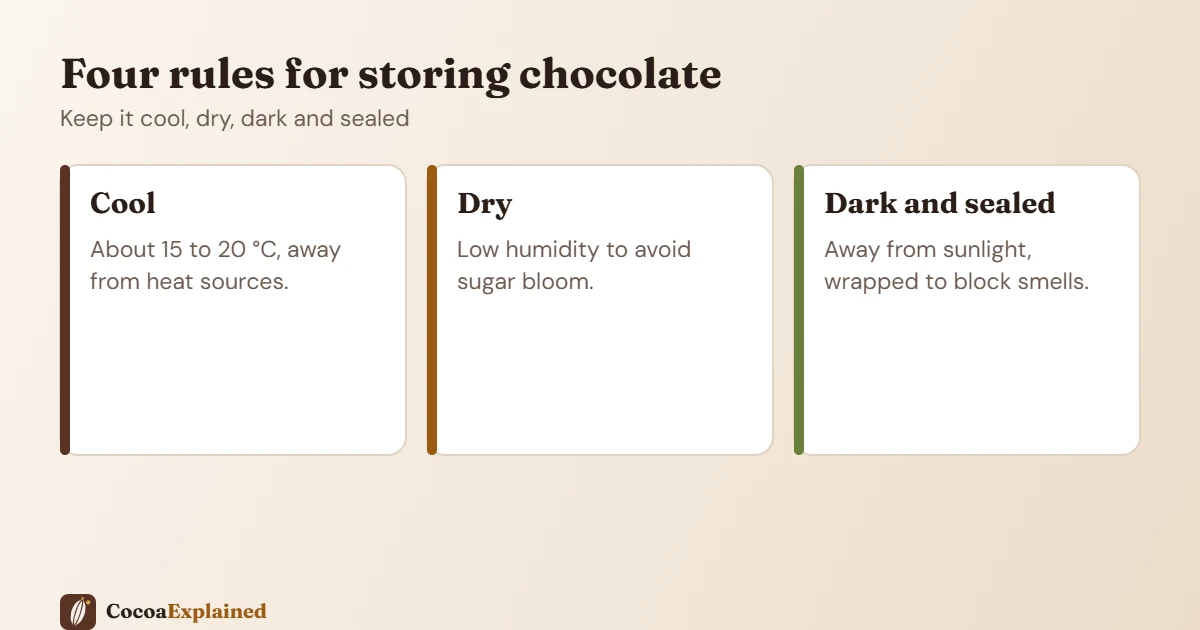
Most chocolate makers and baking authorities give very similar advice, and it boils down to this:
- Cool, but not cold. Aim for roughly 15 to 18°C (about 60 to 65°F). A cupboard in a cool part of the house is ideal.
- Dry. Relative humidity below about 50 per cent is best. Moisture is what causes sugar bloom and can also affect filled chocolates.
- Dark. Direct sunlight warms chocolate and can affect flavour over time, so keep it in a cupboard or a drawer.
- Airtight and away from smells. Cocoa butter, the fat in chocolate, absorbs odours very easily. Coffee, spices, onions and strong cheese are all bad neighbours.
- Steady. Fluctuating temperatures matter more than a slightly-too-warm average. Constant warm-cool-warm cycles are what cause fat bloom.
A cool pantry, a lower kitchen cupboard away from the oven, or a wardrobe shelf in a cooler room all work. A shelf above the cooker, a windowsill or a glove compartment do not.
How long does chocolate last?
Chocolate does not “spoil” in the way fresh food does, because it contains very little water. What changes over time is flavour, texture and appearance. As a rough guide, assuming good storage and an unopened or well-wrapped bar:
| Type | Rough shelf life | Notes |
|---|---|---|
| Dark chocolate | Often a year or more | Lasts longest because of high cocoa content and low milk |
| Milk chocolate | Several months to about a year | Milk solids age faster and the flavour can turn stale |
| White chocolate | Several months to about a year | Cocoa butter can pick up odours and turn stale |
| Filled chocolates and truffles | Days to a few weeks | Fresh cream and nut fillings shorten life; follow the label |
| Baking chocolate and chips | Often a year or more | Check the best-before date |
Treat these as general guidance, not guarantees. The best-before date on the pack is the manufacturer’s own estimate for that specific product, so follow it for anything filled or fresh.
Should you keep chocolate in the fridge?
As a general rule, no. A fridge is cold and humid, and chocolate does not enjoy either condition. It also sits next to strongly scented foods that chocolate will happily absorb. Moving chocolate from the fridge into a warm room is the classic way to get condensation on the surface, and that moisture is what dissolves sugar and leaves a gritty bloom.
There are sensible exceptions:
- Your home is hot. If room temperature regularly goes above about 25°C (77°F), a fridge is better than a warm cupboard.
- Fresh or filled chocolates. Truffles with fresh cream centres and similar products often need chilling. Follow the label.
- Hot summer weather. A short spell in the fridge is fine if you do it carefully.
If you do use the fridge, do it properly. Wrap the chocolate tightly, ideally in its original wrapper plus an airtight box or sealed bag. When you take it out, leave it unopened until it has come back to room temperature. Any condensation then forms on the outside of the container, not on the chocolate.
What about the freezer?
You can freeze chocolate for longer-term storage, for example if you have bought a lot of baking chocolate on offer, but the same rule applies: moisture and smells are the enemy.
- Wrap the chocolate tightly in cling film or foil, then place it in an airtight container or freezer bag.
- Keep it away from strongly flavoured foods.
- To use it, move it to the fridge for a few hours or overnight, then let it come up to room temperature while still wrapped.
- Use it soon after. Thawed chocolate is better for baking and melting than for eating in a bar.
Freezing can slightly affect texture, so it is better for chocolate you plan to melt or bake with than for a premium bar you want to taste at its best.
Storing chocolate in hot or humid climates
If you live somewhere with a hot or humid season, the usual advice needs adapting. Monsoon-type humidity is tough on chocolate because every time you open a cold container in a damp room, moisture condenses on it.
- Keep the chocolate in an airtight container and add a small food-safe moisture absorber such as a sachet of silica gel meant for food storage, if available.
- Store it in the coolest, driest room you have, ideally with an air conditioner or at least some ventilation.
- In peak summer, the fridge with careful wrapping is often the best option. Buy smaller bars and use them up faster.
- Avoid leaving chocolate in bags, cars or scooter boxes at all. Heat builds up very quickly.

Practical tips for different kinds of chocolate
Bars and tablets
Keep them in their original foil and paper wrapper, then put them in an airtight tin or box. The wrapper is already a good first barrier against air and light. Once opened, fold the foil back over and seal the end.
Baking chocolate and chips
Keep them in a sealed container or the original resealable bag. Because they are often bought in bulk, check for bloom before using them. If it is just bloom, melt it into the recipe as normal.
Truffles and filled chocolates
Follow the storage instructions printed on the box. Many are best eaten within a few weeks of purchase, and ones with fresh cream should be kept cool and eaten quickly.
Melted or leftover chocolate
If you have leftover melted chocolate, pour it onto baking paper, let it set, break it up and store it as you would any other chocolate. It will not be tempered, so it is best used for baking rather than eating on its own. See how to temper chocolate at home if you want a proper glossy finish.
Common storage mistakes
- Leaving chocolate on a sunny windowsill or in a hot car.
- Storing it next to coffee, spices or other strong-smelling foods.
- Keeping it in an open bowl at room temperature for weeks.
- Taking it out of the fridge and unwrapping it immediately.
- Buying big quantities in hot weather without a plan for storing them.
The short version
Keep chocolate cool, dry, dark and airtight, ideally at around 15 to 18°C and away from strong smells. Skip the fridge unless your home is hot or the chocolate has a fresh filling, and if you use it, wrap well and let the chocolate warm up unopened. Dark chocolate lasts longest, filled chocolates the shortest, and the date on the pack is your best guide. Get these basics right and your chocolate will stay glossy and tasting the way the maker intended. For a closer look at the differences between types, see dark, milk and white chocolate.
Frequently asked questions
Should chocolate be stored in the fridge?
Not usually in a cool home. In hot weather it is a good option, as long as the chocolate is wrapped airtight and warmed up in its wrapper before you open it.
Can you freeze chocolate?
Yes. Wrap it airtight, freeze it, and thaw it slowly in the fridge and then at room temperature while wrapped. It works best for baking chocolate.
How long does chocolate last?
Dark chocolate keeps longest, often a year or more if stored well. Milk and white chocolate usually last a shorter time, and filled chocolates the shortest. Follow the best-before date.
Why does chocolate absorb smells?
Cocoa butter easily takes up strong odours from nearby food. Keeping chocolate in its wrapper or an airtight container prevents this.
Is it safe to eat chocolate past its best-before date?
Often yes if it was stored well and looks and smells normal, though quality declines. Discard it if there is fuzzy mould or a sour or musty smell.
Key points to remember
- Store chocolate cool, dry, dark and sealed at a steady temperature.
- In hot weather, use the fridge with airtight wrapping.
- Let chilled chocolate warm up in its wrapper before opening.
- Dark chocolate generally keeps longest.
- Follow the best-before date and check for mould and odd smells.
Related guides
- Why Does Chocolate Turn White? Chocolate Bloom Explained
- Dark, Milk and White Chocolate: The Real Differences
- What Does Cocoa Percentage Mean on Chocolate?
- Does Chocolate Expire? How Long It Really Lasts
- How to Melt Chocolate Without Burning It (3 Easy Ways)
- Start here: a beginner’s guide to chocolate
- Browse all chocolate guides
- Can You Freeze Chocolate?
Sources
- Prestat: The science of chocolate bloom and how to stop it
- Hill Country Chocolate: Why does chocolate turn white?
- Whitakers Chocolates: Why does chocolate go white?
Last updated: October 2026. This guide is educational and is not medical or nutrition advice. See our editorial policy for how we research and write.