Does Chocolate Expire? How Long It Really Lasts
You open the cupboard and find a bar of chocolate you forgot about. The date on the pack was months ago. So, does chocolate expire, and is it still safe to eat?
Short answer: chocolate does go stale, but it is usually past its best long before it becomes unsafe. Dark chocolate keeps the longest, often up to about two years if stored well, while milk, white and filled chocolates are best eaten sooner. This guide explains how long each type lasts, how to spot chocolate that has gone off, and how to store it.
How long does chocolate last?
The answer depends on the type. The figures below are rough, and sources give slightly different ranges, so treat them as a guide and trust the date on your pack first.

- Dark chocolate: up to about two years. It has little or no milk, so it ages slowly.
- Milk chocolate: roughly six months to eighteen months, depending on the source.
- White chocolate: roughly four to twelve months. It is usually the shortest-lived of the bar types.
- Filled chocolates: about six to twelve months, depending on the filling. Cream, nuts and caramel shorten the life.
Want to know why the milk makes such a difference? See what milk chocolate is made of and how dark, milk and white chocolate differ.
Shelf life at a glance
Here is the quick reference. These are rough ranges for chocolate stored well, in a cool, dry place. Different brands, recipes and sources give slightly different numbers, so the date printed on your pack always comes first.
| Product | Typical shelf life | Notes |
|---|---|---|
| Dark chocolate bar | Up to about 2 years | Little or no milk, so it ages slowly |
| Milk chocolate bar | About 6 to 18 months | Sources differ; milk solids shorten the life |
| White chocolate bar | About 4 to 12 months | Usually the shortest-lived bar type |
| Filled chocolates (truffles, caramels, creams) | About 6 to 12 months | Depends on the filling |
| Dark chocolate chips | Up to about 3 years | Stored airtight |
| Milk chocolate chips | About 1 year | |
| White chocolate chips | About 6 to 9 months | |
| Unsweetened cocoa powder | Up to 3 years unopened, at least 1 year once opened | Keep dry and sealed |
What does the date on the pack mean?
Most chocolate carries a “best before” date, not a “use by” date. Best before is about quality: it is the date up to which the maker expects the flavour and texture to be at their best. After that date the chocolate is not suddenly unsafe, it just slowly becomes less pleasant. Chocolate usually becomes stale long before it becomes unsafe, especially plain dark chocolate.
The exception is anything with fresh or moist ingredients, such as cream, caramel, fruit or nut fillings. These can spoil, so respect the date more strictly and keep them cool.
Stale or unsafe? How to tell
Old chocolate usually becomes stale first. It may taste flat, feel dry or chalky, or have a firmer, grainier texture. That is a loss of quality, not a danger.
Be more careful if the chocolate has a filling or contains dairy or nuts. Throw it away if you notice any of these signs:
- A musty, rancid or savoury smell
- A sour taste
- Fuzzy spots that look like mold
- A filling that has leaked or changed texture
White streaks on chocolate: bloom or mold?
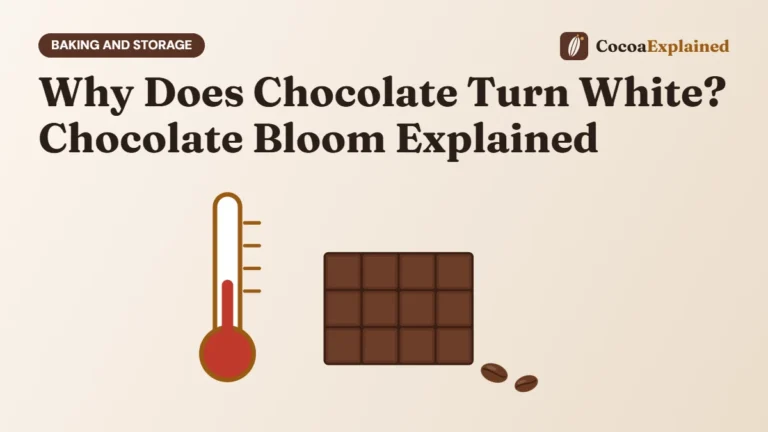
This is the most common worry. A pale film on the surface is usually bloom, and bloom is not mold.

- Fat bloom: cocoa butter rises to the surface, often after heat or big temperature swings. The bar looks streaky or dull.
- Sugar bloom: moisture dissolves some of the sugar, which dries as a gritty white layer.
Both are generally safe to eat, though the texture and flavour may suffer. Our full guide on why chocolate turns white goes deeper. A bloomed bar is still fine to melt for baking, as shown in how to melt chocolate.
Why does chocolate go off at all?
Chocolate is mostly fat and sugar, with very little water, which is why it lasts so long compared with many foods. Three things slowly spoil it.
- Heat and temperature swings. Warm spells make cocoa butter rise to the surface and form fat bloom.
- Moisture. Damp air or condensation dissolves surface sugar, which dries as gritty sugar bloom. Wet conditions can also encourage mold.
- Time, air and smells. Chocolate slowly loses aroma and flavour as it ages, and it soaks up strong smells from foods stored nearby, such as onions, spices or coffee.
Milk, nuts and fillings make chocolate more perishable than a plain dark bar, which is why a plain bar can stay good for years while a filled one cannot.
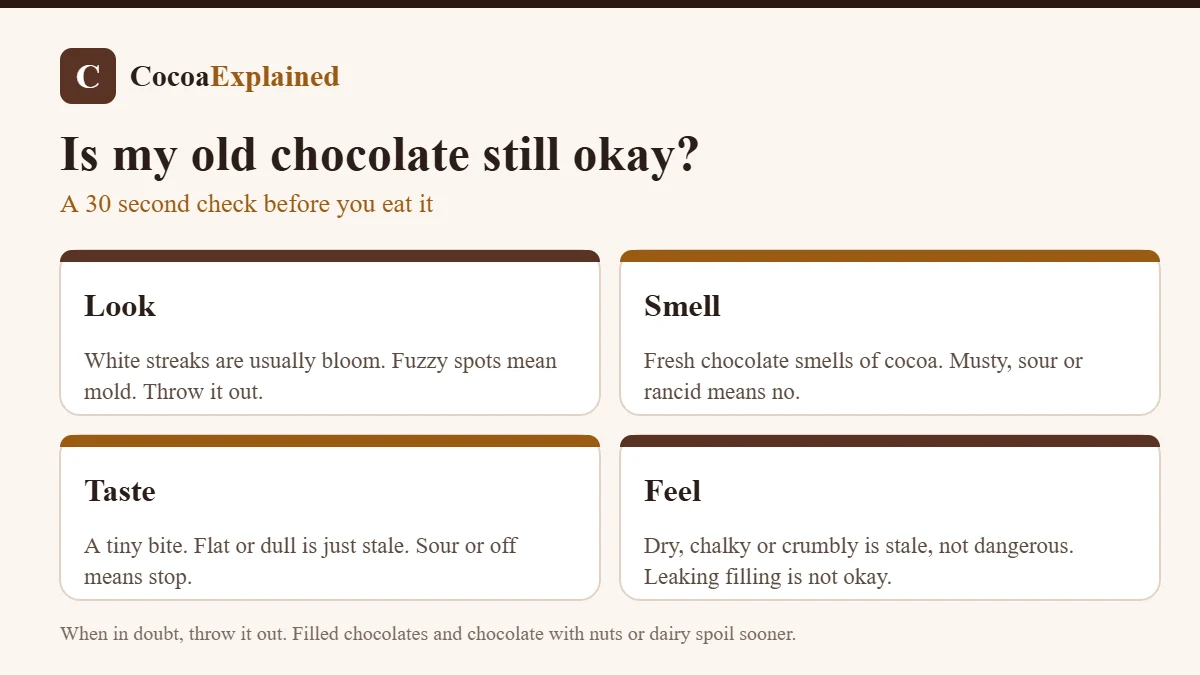
A 30 second freshness check
If you are not sure about an old bar, use your senses. Run through the four checks below, and if anything seems wrong, do not eat it.
How to store chocolate so it lasts longer
- Keep it somewhere cool and dry, around 15 to 21°C (60 to 70°F) if you can.
- Keep it away from sunlight, heat and strong smells.
- Wrap opened bars tightly or use an airtight container.
- Avoid the fridge in most homes. It adds moisture and chocolate can absorb odours.
- If your home is very hot, use a cool cupboard rather than a sunny shelf.
For more detail, read our guide on how to store chocolate.
Storing chocolate in a hot climate
If you live somewhere hot, such as an Indian summer kitchen, the usual advice to keep chocolate in a cool cupboard needs a few extra steps.
- Pick the coolest, darkest spot, away from the stove, fridge back and any sunny wall.
- Keep chocolate in an airtight container so it does not pick up smells or moisture.
- If your home is consistently warm, some sources say the fridge is acceptable. Wrap the chocolate tightly first so it stays dry and does not absorb odours.
- When you take it out, leave it sealed until it comes back to room temperature. This stops water droplets forming on the surface and causing sugar bloom.
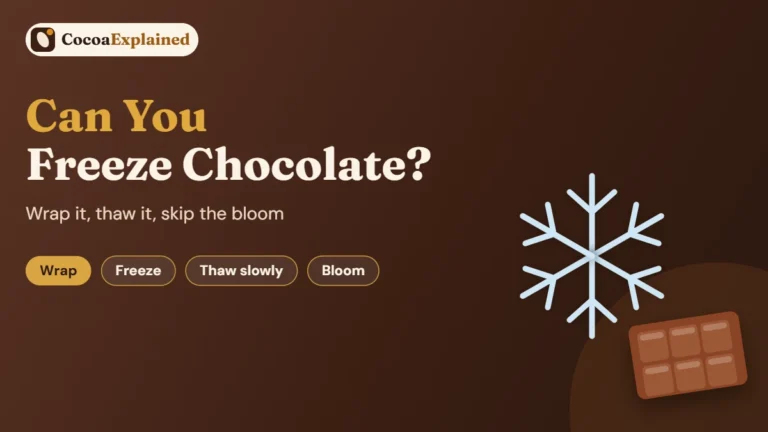
Can you freeze chocolate?
You can, but it needs care. Freezing slows ageing but does not stop the quality from dropping, and sudden temperature changes cause condensation and bloom. Do it gradually:
- Wrap the chocolate tightly, then place it in an airtight container.
- Move it from the freezer to the fridge and leave it for several hours.
- Move it from the fridge to room temperature, still sealed.
- Only unwrap it once it has fully warmed up.
What to do with old chocolate
Chocolate that is merely stale or bloomed does not have to be wasted. If it smells fine and tastes acceptable, use it where texture matters less:
- Melt it for sauces, brownies or cakes. Our guide on how to melt chocolate shows how to do it without burning it.
- Make a mug of hot chocolate, as covered in hot chocolate vs hot cocoa.
- Chop it into cookies or banana bread. See chocolate chips vs baking chocolate for which chocolate suits baking.
Never use chocolate that smells rancid or shows fuzzy mold, even in baking.
Common mistakes
- Treating the best before date as a danger date. It is a quality guide.
- Storing chocolate near the oven, kettle or a sunny window.
- Putting a warm bar straight in the fridge, which causes moisture to form.
- Throwing away bloomed chocolate that is still fine to bake with.
Buying chocolate that lasts
Dark chocolate with a high cocoa percentage tends to keep best. If you buy in bulk or for gifts, our guide to choosing good chocolate and what cocoa percentage means can help you pick well.
Frequently asked questions
Does chocolate expire?
Chocolate does not usually become unsafe on the date printed on the pack, but its quality falls over time. Dark chocolate lasts the longest, while milk, white and filled chocolates are best eaten sooner.
Can you eat chocolate that has turned white?
Usually yes. White streaks are most often fat bloom or sugar bloom, which are harmless. If you see fuzzy spots or smell something musty or rancid, throw it away.
Should I keep chocolate in the fridge?
Most sources advise against it, because the fridge adds moisture and chocolate can absorb strong smells. Keep it cool, dry and away from sunlight instead.
Can you freeze chocolate?
You can, but change the temperature slowly to avoid moisture forming on the surface. Freezing slows ageing but does not stop the quality from dropping.
Can old chocolate make you sick?
Chocolate usually goes stale before it becomes unsafe, so a plain bar past its date is rarely a problem. Chocolate with dairy, nuts or fillings can spoil if kept too long, so check it carefully and throw it out if it smells off or looks moldy.
What is the difference between fat bloom and sugar bloom?
Fat bloom happens when cocoa butter rises to the surface, usually from heat or temperature swings. Sugar bloom happens when moisture dissolves surface sugar that later dries as a gritty film. Both are generally safe to eat.
Key points to remember
- Chocolate usually goes stale before it becomes unsafe.
- Dark chocolate lasts longest, up to about two years. Milk, white and filled chocolates last less time.
- White streaks are usually harmless bloom, but fuzzy spots or a rancid smell mean throw it out.
- Store chocolate cool, dry and away from light and strong smells.
- Check the date on your pack, because brands and recipes differ.
Related guides
- How to Store Chocolate Properly: Temperature and Shelf Life
- Why Does Chocolate Turn White? Chocolate Bloom Explained
- How to Melt Chocolate Without Burning It (3 Easy Ways)
- How to Choose Good Chocolate: What to Check Before You Buy
- Is White Chocolate Real Chocolate? What the Rules Say
- Couverture vs Compound Chocolate: Key Differences
- Chocolate Chips vs Baking Chocolate: Which Is Better?
- Start here: a beginner’s guide to chocolate
- Browse all chocolate guides
- Can You Freeze Chocolate?
Sources
- Does chocolate expire?, Tasting Table.
- Does chocolate expire? Chocolate shelf life guide, Phillips Chocolate.
Last updated: October 2026. This guide is educational and is not medical or nutrition advice. See our editorial policy.