How to Choose Good Chocolate: What to Check Before You Buy
Standing in front of a wall of chocolate, it is hard to know what separates a bar worth buying from one that only looks the part. The packaging is designed to persuade, and words like premium, artisan and rich are free to use. The good news is that a handful of checks on the back of the pack tell you most of what you need to know, and none of them require expert taste buds.
This guide gives you a simple order to work through. It will not pick your favourite for you, because taste is personal, but it will help you avoid paying extra for chocolate that is not what it pretends to be.
Start with the ingredient list
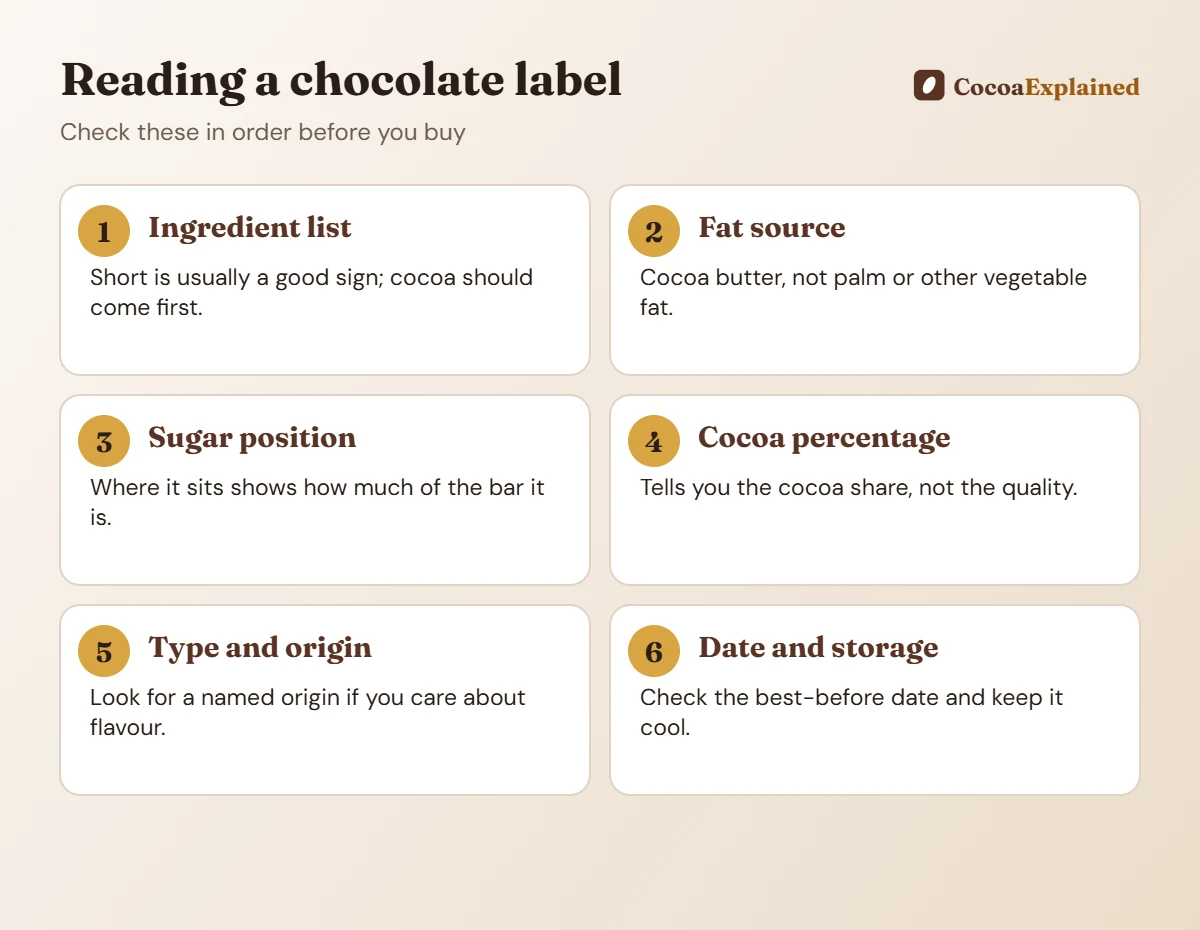
Ingredients are listed from the largest amount to the smallest, so the first few items tell you what the bar is mostly made of. In a dark bar you want to see cocoa ingredients (cocoa mass, cocoa beans or cocoa liquor) near the top. In a milk bar, expect sugar and cocoa ingredients near the top and milk powder after them.
Shorter is usually simpler. A typical good dark bar lists cocoa mass, sugar, cocoa butter and perhaps vanilla or an emulsifier. That is not a rule, since a long list is not automatically bad, but a long list full of unfamiliar items deserves a second look.
Check where the fat comes from
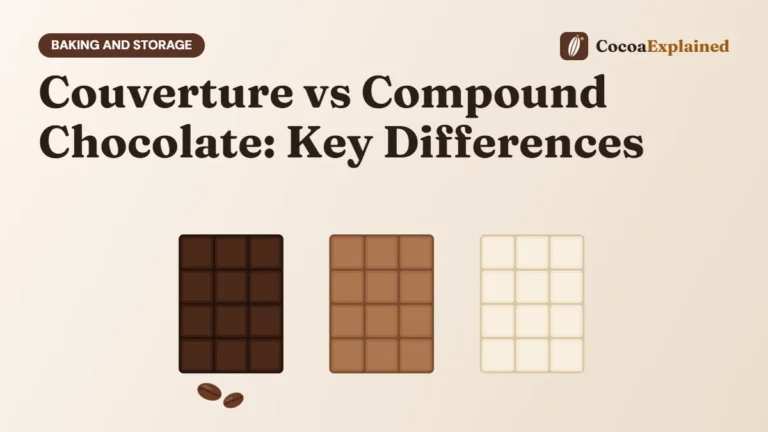
Real chocolate gets its fat from cocoa butter. If you see palm oil, shea or another vegetable fat in place of it, you are usually looking at something sold as a coating or compound, which melts differently and tastes flatter. Some countries allow limited amounts of other vegetable fats in chocolate, so reading the list matters. We explain the difference in detail in couverture vs compound chocolate.
Look at where sugar sits
If sugar is the first ingredient on a dark bar, there is more sugar than anything else in it. That is common in milk chocolate and fine if you like it, but it is a poor sign for something marketed as dark or high cocoa. The list will not tell you the exact amounts, which is why the next check helps.
Read the cocoa percentage with care
The percentage tells you how much of the bar comes from cocoa ingredients, meaning cocoa mass plus added cocoa butter. A 70% bar is 70% cocoa ingredients and 30% everything else, mostly sugar. It does not tell you about flavour or quality. A higher number is more bitter and less sweet, not automatically better. Our cocoa percentage guide covers what it does and does not mean.
Understand the type of chocolate
Dark, milk and white chocolate differ in their ingredients, and the names are controlled in many countries, so the wording on the pack matters. Dark, milk and white chocolate and white chocolate are worth a read if you are unsure which is which. If a pack says chocolate-flavoured, chocolatey, candy coating or compound, it is not sold as chocolate and the ingredient list will usually show why.
Consider origin and maker
Named origins such as a country or region suggest the maker cares about where the beans came from, and they let you compare bars. If flavour is your priority, a bar that names its origin and maker is more likely to reward attention. See what single-origin chocolate means and what bean-to-bar means for how those labels work and what they do not promise.
Check the look, snap and smell
You can learn a lot once you open the bar, though you will not see it until you buy. Good chocolate usually has an even, glossy surface and breaks with a clean snap. It smells of cocoa rather than only of sugar. Grey streaks or a dusty surface usually mean bloom, which is cosmetic and safe to eat but suggests the bar has been through temperature swings. Why chocolate turns white explains it.
Treat price as a clue, not a verdict
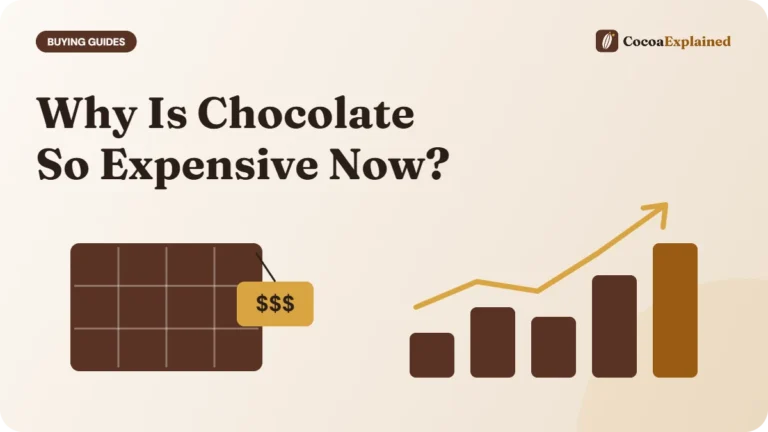
Very cheap chocolate often uses cheaper fats and more sugar, and very expensive chocolate is not always worth it. Price often reflects bean quality, scale and packaging. If you are choosing between two bars at different prices, compare the ingredient lists first. If the lists are similar, the more expensive one is mostly charging for brand or presentation.
Be sceptical of certification logos, but do not ignore them
Certification schemes exist to cover things like farm practices and sourcing, and some are meaningful. They differ in what they check and how strictly, so a logo alone does not tell you much. If sourcing matters to you, look for a maker that describes specifically what they do and who they buy from rather than relying on a symbol.
Check the date and how it has been stored
Dark chocolate keeps for a long time, but flavour fades and storage matters. Look at the best-before date, and avoid bars from a warm shelf in direct sunlight. At home, keep chocolate cool, dry and away from strong smells. Our guide to storing chocolate has the details.
A shorthand for the shelf
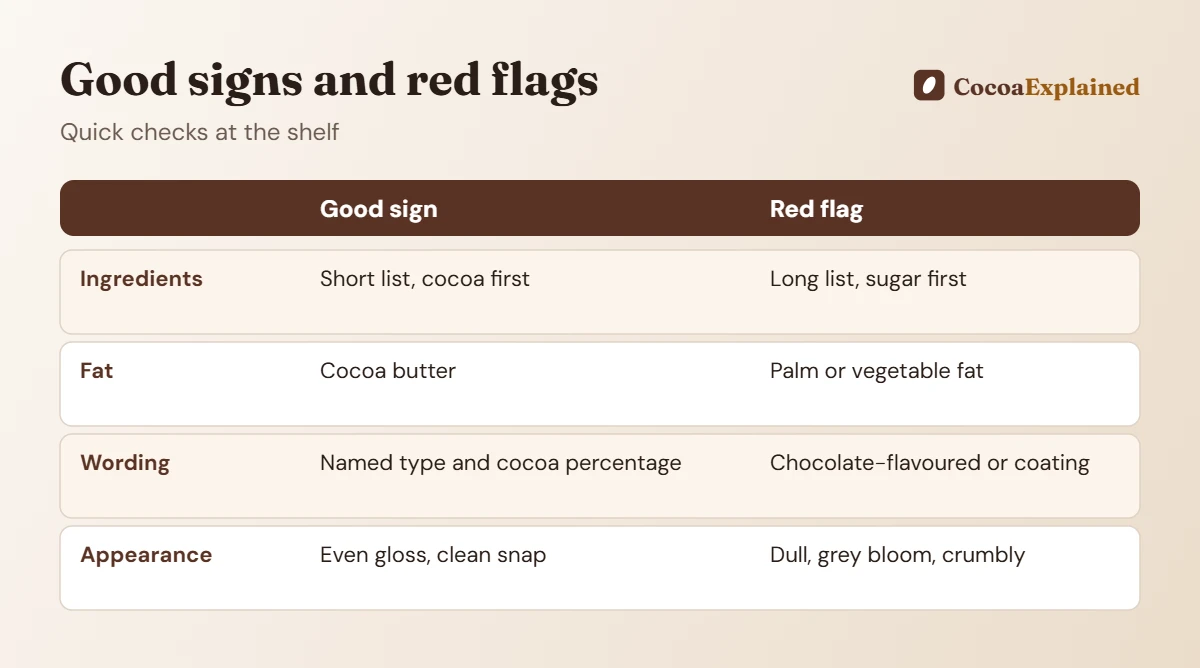
| Check | Good sign | Red flag |
|---|---|---|
| Ingredients | Cocoa near the top, short list | Sugar first on a dark bar, long list |
| Fat | Cocoa butter | Palm or other vegetable fat standing in for it |
| Wording | Dark, milk or white with a percentage | Chocolate-flavoured, coating, compound |
| Origin | Named country or region | No information at all |
| Appearance | Even gloss, clean snap | Dull, crumbly, heavy grey bloom |
Choosing by purpose
- For eating on its own: pick a bar with a clear origin and a short ingredient list, and taste it slowly. How to taste chocolate shows you how.
- For baking: pick the type your recipe calls for, usually one with enough cocoa butter to melt smoothly. Chips vs baking chocolate explains the difference.
- For gifts: choose something with a clear origin and maker story, and check it has been stored sensibly.
- On a budget: a plain supermarket dark bar with a short ingredient list is often better value than a fancy wrapper.
None of this needs special equipment. Spend thirty seconds with the label and you will avoid most of the disappointments, and over time you will learn which makers and styles you prefer.
Green flags and red flags on the label
| Check | Green flag | Red flag |
|---|---|---|
| Ingredient list | Short and easy to read | Long list with many additives |
| Fat | Cocoa butter | Palm or other vegetable fat standing in for cocoa butter |
| Cocoa percentage | Clearly stated on the front | Missing or hidden in small print |
| Wording | “Chocolate” | “Coating”, “confectionery” or “flavoured” |
| Origin and maker | Named maker, and origin if single-origin | No information at all |
| Price | Reasonable per 100 g for the quality | Very cheap for a large bar, which may mean low cocoa and more fillers |

Match the chocolate to the job
| What you want to do | What to look for |
|---|---|
| Eat and taste it plain | A bar with a clear cocoa percentage and short ingredient list. See how to taste chocolate |
| Bake cookies or brownies | Bar chocolate or chunks. See chocolate chips vs baking chocolate |
| Dip, coat or mould | Couverture. See couverture vs compound chocolate |
| Explore flavour | Single-origin or bean-to-bar bars. See single-origin chocolate |
| Save money | Compare price per 100 g and read why chocolate is so expensive |
Frequently asked questions
How can I tell if chocolate is good quality
Start with the ingredient list. Good chocolate gets its fat from cocoa butter, lists cocoa ingredients near the top and avoids a long list of additives. Then check appearance, snap and smell.
Is higher cocoa percentage better
Not automatically. A higher percentage means more cocoa and less sugar, so it tastes more bitter. Quality depends on the beans and how the chocolate is made.
What should I avoid when buying chocolate
Be wary of palm or other vegetable fat standing in for cocoa butter, sugar as the first ingredient on a dark bar, and wording such as chocolate-flavoured or coating.
Does expensive chocolate taste better
Often, but not always. Price reflects bean quality, scale and packaging. Compare ingredient lists before assuming a higher price means a better bar.
Are certifications a guarantee of ethical chocolate
They can be useful but they differ in what they check. Look for specific information from the maker as well as a logo.
Is chocolate with white streaks safe to eat
Usually yes. White or grey streaks are generally bloom, caused by temperature changes. It affects texture and appearance, not safety, though the chocolate may taste duller.
Key points
- Read the ingredient list first and check that fat comes from cocoa butter.
- Sugar position and cocoa percentage show what the bar is mostly made of.
- Wording such as chocolate-flavoured or coating means it is not sold as chocolate.
- Named origins and clear maker information are better signs than vague adjectives.
- Price is a clue, not proof of quality.
Related guides
- What does cocoa percentage mean
- Couverture vs compound chocolate
- How to store chocolate
- What is bean-to-bar chocolate
- What Is Milk Chocolate Made Of?
- Dubai-Style Chocolate: Which Brands Make It in 2026?
- Why Does Hershey’s Chocolate Taste Sour? Explained
- Does Chocolate Expire? How Long It Really Lasts
- Is Dark Chocolate Actually Healthy?
- Start here: a beginner’s guide to chocolate
- Browse all chocolate guides
- Free cheat sheet: how to read any chocolate label
Sources
- U.S. eCFR Title 21 Part 163: cacao products
- EUR-Lex Directive 2000/36/EC on cocoa and chocolate products
- International Cocoa Organization
Last updated: October 2026. This guide is educational and is not medical or nutrition advice. See our editorial policy.