
Why Does Chocolate Seize? How to Fix It
You are melting chocolate and it looks perfect. Smooth, glossy, flowing. Then a tiny splash of water lands in the bowl, or some steam drips from the lid, and the whole thing turns thick, dull and grainy in seconds. That is called seizing, and it is one of the most common problems when melting chocolate. It looks like a disaster, but it is easy to understand and often easy to rescue.
Short answer: chocolate seizes when even a small amount of water gets into it. The water mixes with the sugar, forms a thick syrup and makes the cocoa particles clump together. You can often fix it by stirring in a little boiling water, or by adding fat or hot cream, but the rescued chocolate is best used for sauces and drinks rather than delicate baking.
What is chocolate seizing?
Seizing is when smooth, melted chocolate suddenly turns into a stiff, lumpy, grainy mass. It does not pour any more. It looks dry and dull instead of glossy. The usual cause is moisture. Chocolate is made of cocoa particles and sugar suspended in cocoa butter, which is a fat. Fat and water do not mix, so water changes how the whole mixture behaves.
Why does water make chocolate seize?
America’s Test Kitchen explains that even a little moisture mixes with the sugar in the chocolate and forms a syrup. The cocoa particles cling to that syrup, and that gives the grainy clumps you see. A small amount of water is enough to cause it.
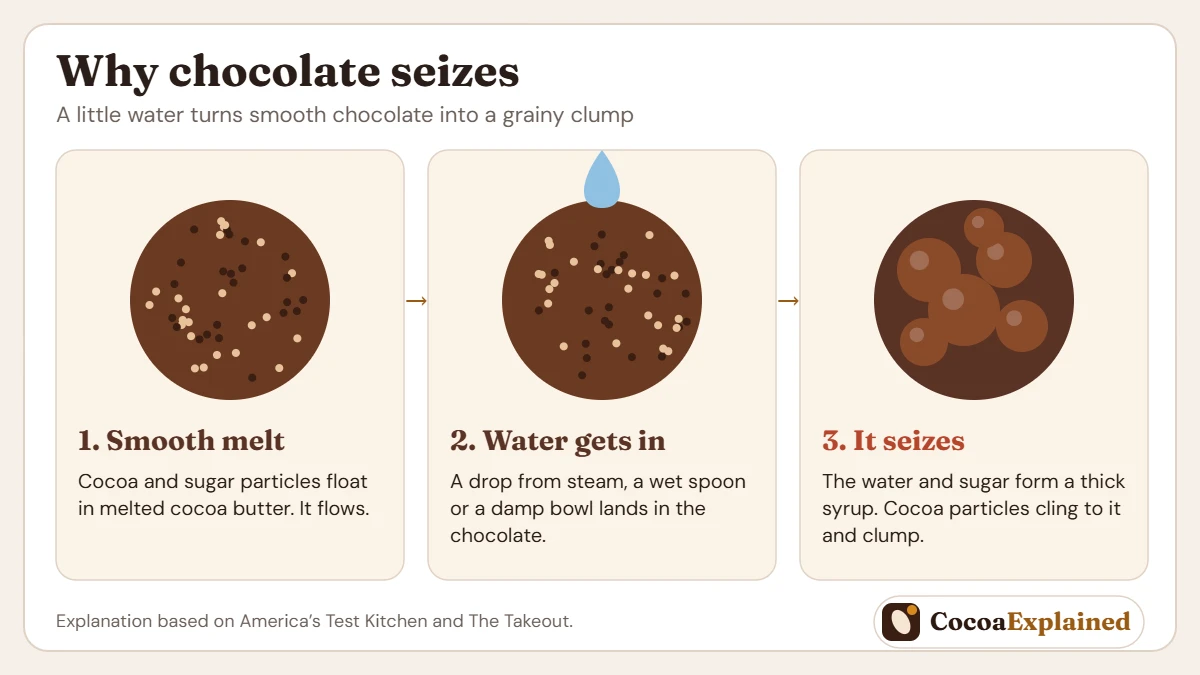
This is why a lot of liquid can work better than a little. When you add enough liquid, such as cream, there is enough to blend with the fat and sugar into a smooth mixture. That is how a ganache works. A few drops, on the other hand, make a lump.
Common causes of seizing
- A wet bowl or spoon. Even a few drops left after washing can be enough. Dry every tool completely.
- Steam and condensation. Water from a covered bowl or a double boiler can drip into the chocolate. Do not cover the bowl, and keep the simmering water below the base of the bowl.
- Wooden spoons. Wood can hold moisture. Silicone spatulas are a safer choice.
- Adding a small amount of liquid. Even a little liquid can seize the chocolate. If a recipe needs liquid, melt the chocolate together with the liquid.
Our guide on how to melt chocolate covers gentle ways to melt chocolate and keep moisture out.
How to fix seized chocolate
There are three common rescues. Which one you choose depends on what you plan to make.
1. Add boiling water, a little at a time
Add 1 teaspoon of boiling water and stir hard. Keep adding it 1 teaspoon at a time, stirring each time, until the chocolate turns smooth again. The catch is that the chocolate is now thinned out. America’s Test Kitchen says it can no longer be reliably used for baking. Use it for a sauce, hot chocolate or a drizzle instead.
2. Add a little fat
For recipes like brownies or rocky road, you can stir in fat such as vegetable oil, coconut oil or butter, about 1 tablespoon at a time, until the chocolate loosens. This works for recipes that already contain fat.
3. Add hot cream, slowly
If you are making something like a lava cake or a pudding, stir in a little hot cream at a time. The extra liquid blends with the chocolate and turns it into a thick, smooth mixture, much like a ganache.

| Rescue | How | Best for |
|---|---|---|
| Boiling water | 1 teaspoon at a time, stir hard | Sauce, hot chocolate, drizzle |
| Fat | Oil, coconut oil or butter, 1 tablespoon at a time | Brownies, rocky road |
| Hot cream | A little at a time, stirring | Lava cake, pudding, ganache-style use |
How to stop chocolate seizing next time
- Dry your bowl, spatula and any tools completely before you start.
- Use a silicone spatula instead of a wooden spoon.
- Do not cover the bowl while melting.
- Keep the water under a double boiler from touching the bowl and keep steam away.
- Melt gently and stir often. If a recipe has liquid, melt the chocolate with that liquid.
The type of chocolate you melt matters too. Our guide to couverture vs compound chocolate explains the difference. If your finished chocolate later turns pale or streaky, that is a separate issue. Read why chocolate turns white to find out why. And if you want to make shiny, snappy chocolate, see how to temper chocolate at home.
What to do with rescued chocolate
Once the chocolate is smooth again, it is worth using right away. Because it has been thinned or changed, it will not behave like fresh melted chocolate, so choose a recipe that does not depend on perfect texture.
- Hot chocolate: whisk the rescued chocolate into warm milk.
- Chocolate sauce: pour it over ice cream, pancakes or fruit.
- Drizzle: spoon it over a cake or cookies as a simple topping.
- Brownies or rocky road: if you rescued it with fat, stir it into a recipe that already has fat.
Seizing, in short: what is really going on?
| Situation | What happens | Result |
|---|---|---|
| A few drops of water | Water grabs the sugar and forms a syrup | Thick, grainy clumps |
| Condensation from a covered bowl | Water drips in and acts the same way | Seized chocolate |
| Plenty of hot cream, added together | Enough liquid blends with fat and sugar | Smooth ganache |
| Dry tools, open bowl, gentle melting | No stray water gets in | Smooth, glossy chocolate |
The pattern is simple: either keep water out completely, or add enough liquid at once so it blends in. Small, accidental amounts are what cause the trouble.
Where seized chocolate fits in your chocolate skills
Seizing is a common problem when melting chocolate, and it teaches a useful lesson about how chocolate behaves. Once you know that water and chocolate need careful handling, melting becomes much less stressful. A good next step is learning to temper chocolate, which builds on gentle, careful melting. It also helps to know what is in the bar you are melting, so read what chocolate is if you want to understand the ingredients better.
Frequently asked questions
Why did my chocolate seize?
Most likely a little water got in. A damp bowl, a wet spoon or steam from a covered bowl is enough. The water mixes with the sugar to form a syrup that makes the cocoa particles clump together.
Can you fix seized chocolate?
Often yes. Stir in boiling water 1 teaspoon at a time until it turns smooth, or add a little fat or hot cream. The fixed chocolate is better for sauces and drinks than for delicate baking.
Can you use seized chocolate for baking?
America’s Test Kitchen says chocolate rescued with water can no longer be reliably used in baking because it is diluted. Use it for sauce, hot chocolate or a drizzle. Chocolate rescued with fat can still work in recipes that already contain fat, such as brownies.
Is seized chocolate the same as burnt chocolate?
The sources we checked point to moisture as the cause of seizing, not heat. Melting gently and keeping everything dry is the safest approach.
How do I stop chocolate from seizing?
Keep everything dry. Use silicone tools, do not cover the bowl and keep steam away. If a recipe has liquid, melt the chocolate with the liquid instead of adding it later.
Why does a lot of liquid not seize chocolate?
With enough liquid, such as cream, the chocolate blends into a smooth mixture instead of forming a sticky lump. That is how ganache works.
Key points to remember
- Chocolate seizes when a little water meets the sugar and cocoa particles and makes a grainy, thick mass.
- Dry tools, no lid and gentle heat prevent most cases.
- Rescue it with boiling water 1 teaspoon at a time, or with fat or hot cream.
- Rescued chocolate is best for sauces, drinks and drizzles.
- If a recipe contains liquid, melt the chocolate with the liquid.
Related guides
- How to Melt Chocolate
- How to Temper Chocolate at Home
- Couverture vs Compound Chocolate
- Why Does Chocolate Turn White?
- How to Make Chocolate Ganache
Sources
- How to Fix Seized Chocolate, America’s Test Kitchen.
- How To Prevent Chocolate From Seizing (And How To Fix It When It Does), The Takeout.
Last updated: October 2026. This guide is educational and is not medical or nutrition advice. See our editorial policy.